
Mechanic Guides
Automotive Multimeter Relative Mode: Keep the Baseline with the Reading
Keep a multimeter REL baseline, units and setup with each result. Avoid confusing a relative difference with an absolute measurement.
Published · 5 min read
Quick answer
Relative mode displays a difference from a stored baseline. Record the baseline, units and mode with the result. Lead compensation does not remove parallel paths or establish circuit health.
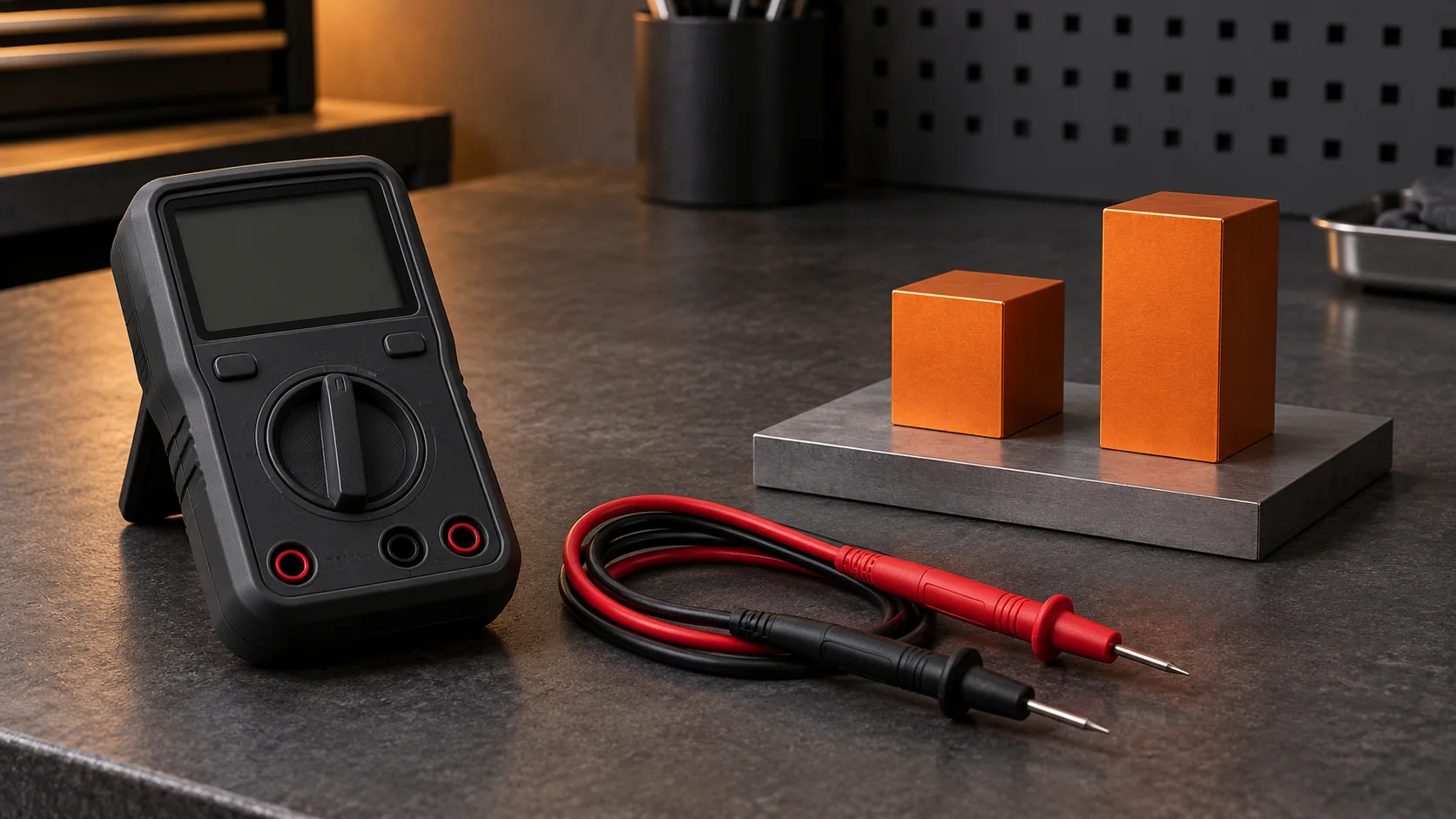
Relative mode changes the meaning of the number on the display. It compares the present measurement with a stored baseline. A result near zero can mean that little has changed from that baseline; it does not automatically mean that the circuit has zero voltage or resistance.
Write down what zero means
Before enabling REL, record the measurement function, units and baseline. Check the exact meter manual for how the reference is stored, displayed and cleared. Some instruments show the actual value and reference alongside the difference; others require a separate check.
For a simple difference mode, the displayed result is the present measurement minus the stored reference. A negative result means the present measurement is below that reference. It is not, by itself, evidence of reversed test leads or a new fault. Percentage-relative modes require their own interpretation and must not be recorded as ordinary volts or ohms.
Use lead compensation with a stable setup
In resistance testing, REL can compensate for the resistance measured with the test leads shorted together. Follow the instrument instructions, use stable clean contact, and retain the lead configuration used to establish the baseline. Recheck it if you change leads, clips or the setup.
Only measure resistance on a circuit made safe and de-energized under the applicable vehicle and instrument procedures. Stored energy and parallel paths must be addressed as those procedures require. Do not apply this general workflow to high-voltage or restraint circuits without their specific service instructions.
Subtracting a lead baseline does not remove a parallel path through the vehicle, repair an unstable contact, or establish that the meter can resolve the difference needed for the diagnosis. If the reading wanders while the lead tips are together, investigate the setup before turning that instability into a supposedly precise corrected result.
Separate the observation from the correction
Keep three fields in the work record: the stored baseline, the uncorrected observation when available, and the relative result. Label each with units. Add the meter function and range, especially when another technician will repeat the test with different equipment.
The auto versus manual range guide explains why display resolution and accuracy need separate attention. REL changes the reference used for the result. It does not establish a tighter accuracy specification or prove that an unloaded resistance measurement answers a loaded-circuit complaint.
Fictional handoff: a negative resistance display
A technician establishes a lead baseline, then changes the probe clips and sees a small negative relative result. Recording that number as the component's resistance would omit the essential fact that it is a difference from an earlier setup.
The technician saves the observation, checks the meter mode and repeats the lead check with the intended configuration. The handoff identifies the setup change and leaves the component conclusion open until an appropriate repeat test is complete. No universal threshold is inferred from this fictional example.
Return to an absolute reading deliberately
Before the next test, confirm whether REL remains active and clear it as directed by the meter manual when an absolute measurement is required. Verify the displayed mode rather than relying on memory of a button press. A copied number without its mode can lead the next technician to answer a different question.
Keep these details with the downloadable record:
- Diagnostic question and applicable test procedure.
- Meter, function, range, units and REL indicator state.
- Stored baseline and how it was established.
- Lead or clip configuration and any subsequent changes.
- Uncorrected observation and relative result, clearly distinguished.
- Repeat check, remaining limitation and next test.
STEP is in Early Access. Request early access to discuss retaining diagnostic observations and planning the next test in your shop. This guide does not imply automatic meter capture or instrument integration by STEP.