
Mechanic Guides
Brake Rotor Runout vs. Thickness Variation: Keep Three Measurements Separate
Separate brake rotor lateral runout, disc thickness variation and minimum thickness. Preserve measurement setup, original readings and each applicable specification.
Published · 4 min read
Quick answer
Use separate entries for installed runout, circumferential thickness spread and minimum thickness. Each needs its own setup, units and applicable manufacturer requirement.
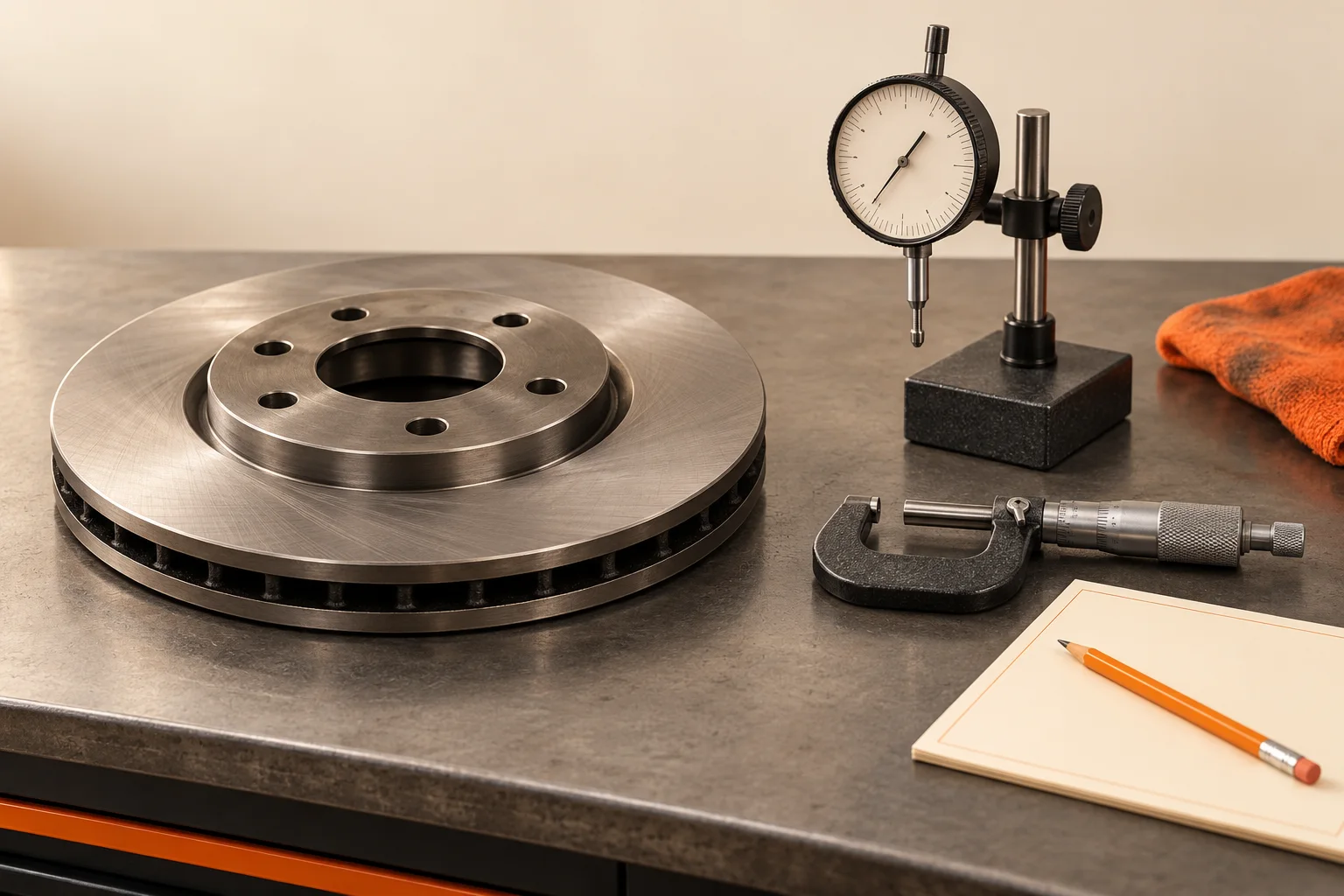
A rotor can have measurable movement at its installed friction face, unequal thickness around its circumference, or insufficient remaining thickness. Those are three different questions. A single entry such as "rotor out" does not tell the next technician which one was tested.
For an independent shop, the useful result is a measurement attached to its setup, units and applicable limit. Keep assembled runout, thickness variation and minimum thickness on separate lines before deciding what the evidence supports.
Match the question to the instrument
Delphi's brake-disc measurement guide distinguishes a dial indicator check of disc movement during rotation from a micrometer check of thickness differences around the disc. Its guidance also stresses secure disc clamping and comparison with manufacturer specifications.
Brembo's metrology-kit page separately identifies the comparator for rotor oscillation and the micrometer for remaining thickness. It points to the rotor's MIN TH marking for that wear check. A minimum-thickness value is not a runout allowance.
Write the question before taking the reading: installed-face movement, thickness spread, or remaining material. That small distinction keeps the chosen instrument and the eventual comparison aligned.
Establish the applicable setup first
Find the procedure for the exact vehicle, brake arrangement and rotor. It must govern support, access, any required brake service mode, rotor retention, measurement positions and limits. Delphi's example uses a particular vehicle; it is not a universal setup for every brake system.
This article does not prescribe retention torque, measuring radius, number of sample points or a service limit. Put those requirements and their source on the job card before beginning. Stop if the procedure or safe setup is unresolved.
As an original recordkeeping practice, identify the rotor and corner, instrument, units, retention arrangement and procedure revision together. A later technician should be able to distinguish a measured result from a setup that was merely planned.
Preserve the runout reading as an installed result
For a runout entry, record the applicable contact location, assembly condition and observed indicator extremes. Include how the disc was retained and whether the measurement was repeated using the same setup.
An illustrative calculation: if an indicator record spans from -0.02 mm to +0.03 mm during the specified check, the difference is 0.05 mm. That is arithmetic on two invented readings, not an acceptable runout specification or proof that a real rotor needs replacement.
Do not silently turn that difference into a material-thickness value. Also avoid assigning a cause from the number alone. The worksheet should carry the measured assembly condition and the next check required by the applicable procedure, rather than an unsupported component verdict.
Keep the thickness series and its minimum
Save the individual micrometer readings with their positions, following the procedure's measurement pattern. Then retain both the thinnest reading and the spread between the largest and smallest readings. They answer different questions.
For example, invented thickness readings of 25.010, 25.025 and 25.015 mm have a minimum of 25.010 mm and a spread of 0.015 mm. The three numbers demonstrate the calculation only; three points are not an approved sampling method.
The minimum must be compared with the applicable remaining-thickness requirement. The spread needs its own applicable variation limit. Without those references, neither example establishes a pass, a machining allowance or a replacement decision.
A three-line worksheet that survives a handoff
The downloadable worksheet uses an original three-part result format:
- Assembled runout: procedure and setup, indicator extremes, difference, units, applicable limit and source.
- Thickness variation: prescribed positions, original readings, maximum-minus-minimum spread, units and applicable limit.
- Minimum thickness: thinnest recorded point, rotor identification, applicable wear requirement and source.
Finish each line with "comparison completed" or "comparison pending." If a reading is repeated after a setup change, preserve the original and add a new result with that change identified. A replacement result should not erase the evidence that prompted the recheck.
This is also a useful boundary for the customer-facing explanation: describe what was measured and which comparison was completed. Do not collapse an incomplete measurement record into "warped rotors."
Use the evidence to frame the next step
These records do not replace a brake inspection, applicable service information or the shop's release-to-service checks. They make the unresolved question visible: missing setup, missing limit, repeat measurement or a procedure-directed investigation.
See STEP's diagnostic methodology and editorial policy for the evidence boundaries used in these guides. If your shop wants to follow STEP Diagnostics, request Early Access. The worksheet is available now; the invitation does not promise a measurement feature, a repair verdict or a particular result.