What this code means
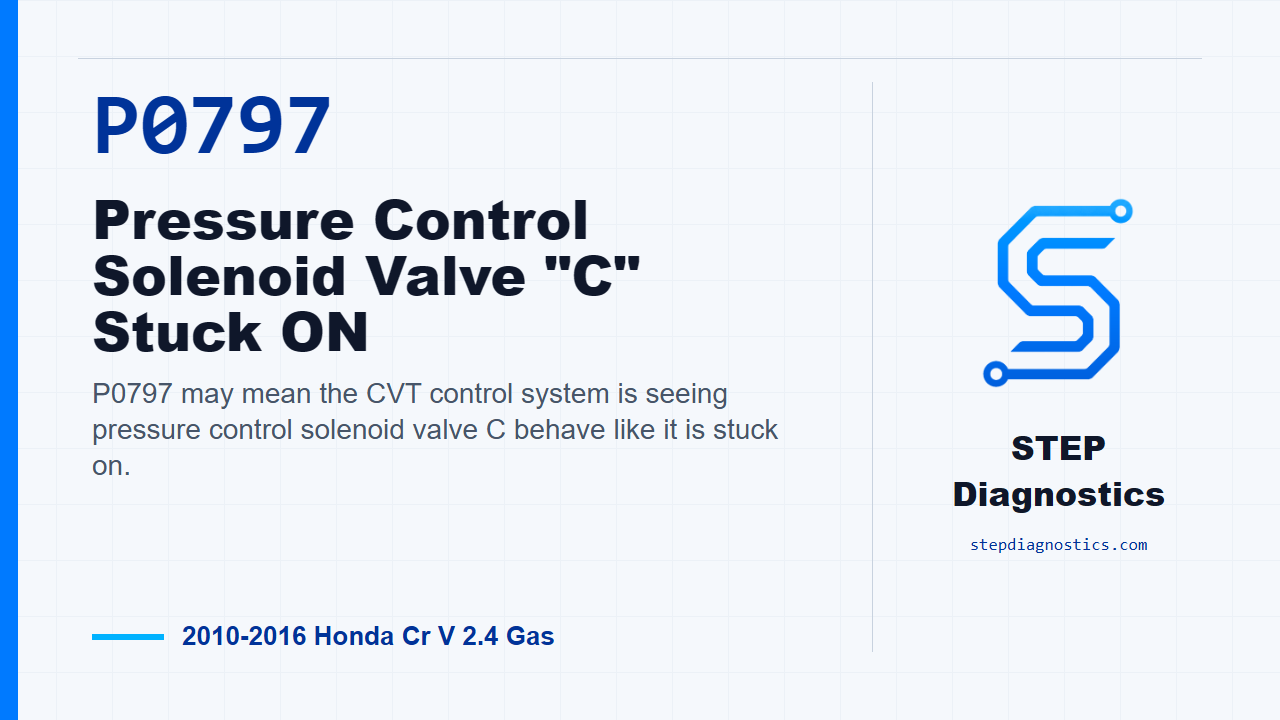
P0797 may mean the CVT control system is seeing pressure control solenoid valve C behave like it is stuck on.
What the vehicle may do
- The vehicle may show a transmission-related warning or check engine light.
- The vehicle can have abnormal engagement or unusual CVT behavior during range changes.
Possible fault areas
- Possible fault areas can include the CVT hydraulic control area, solenoid operation, valve body behavior, or an intermittent condition that only appears under certain operating koş
Diagnostic path
Opening context
On this 2010 to 2016 Honda CR-V with the 2.4 gas engine, P0797 points to pressure control solenoid valve C being seen as stuck on in the CVT control system. In plain terms, the transmission control side may not be getting the hydraulic response it expects. The vehicle may show a warning light, may have abnormal engagement, or can act up during range changes. Broadly, this can involve the CVT hydraulic control area, solenoid operation, valve body behavior, or an intermittent condition that only shows up under the right operating conditions. Before getting deep into it, start with the basic system checks so you are not chasing the wrong problem before you run the code-specific check.
Set up the code check
Start the problem verification by turning the vehicle to ON mode. Then clear the DTC with the HDS. At this point, the goal is not to guess at the fault. The goal is to clear the memory, run the CVT through the commanded routine, and see if P0797 comes back as a pending or confirmed code.
Run the shift routine
With the brake pedal pressed, run this shift lever routine five times. Start the engine in P. Shift to N, then to D. Shift back to N and wait for at least 2 seconds. Then shift to D again. After that set is complete, turn the engine off and repeat that same shift lever operational mode five times. Keep the routine controlled and consistent, because this is how you try to duplicate the fault instead of making a call from a stale code.
Check whether P0797 duplicated
Now check for pending or confirmed DTCs with the HDS. The decision point is simple: see whether P0797 is indicated after the shift routine. That result is what separates a duplicated failure from a condition that is not showing up at this time.
Make the diagnostic call
If P0797 is indicated, the failure is duplicated. In this path, that points to a faulty CVT clutch pressure control solenoid valve, and the repair call is to replace the lower valve body. If P0797 is not indicated, treat it as an intermittent failure, and the system is OK at this time. If captured freeze data or an on-board snapshot is available for this DTC, try to reproduce the failure using those same captured conditions.
Takeaway
The key with P0797 is to duplicate the fault with the specified CVT shift routine before condemning anything. If the code returns, follow the duplicated-failure result. If it does not, handle it as intermittent and use the captured conditions to guide the next check. For more diagnostic training, visit stepdiagnostics.com.
Final check
This code is often handled by trying to duplicate the fault first, then making the next diagnostic decision from whether P0797 returns.
For more guided automotive diagnostics, visit STEP Diagnostics.