
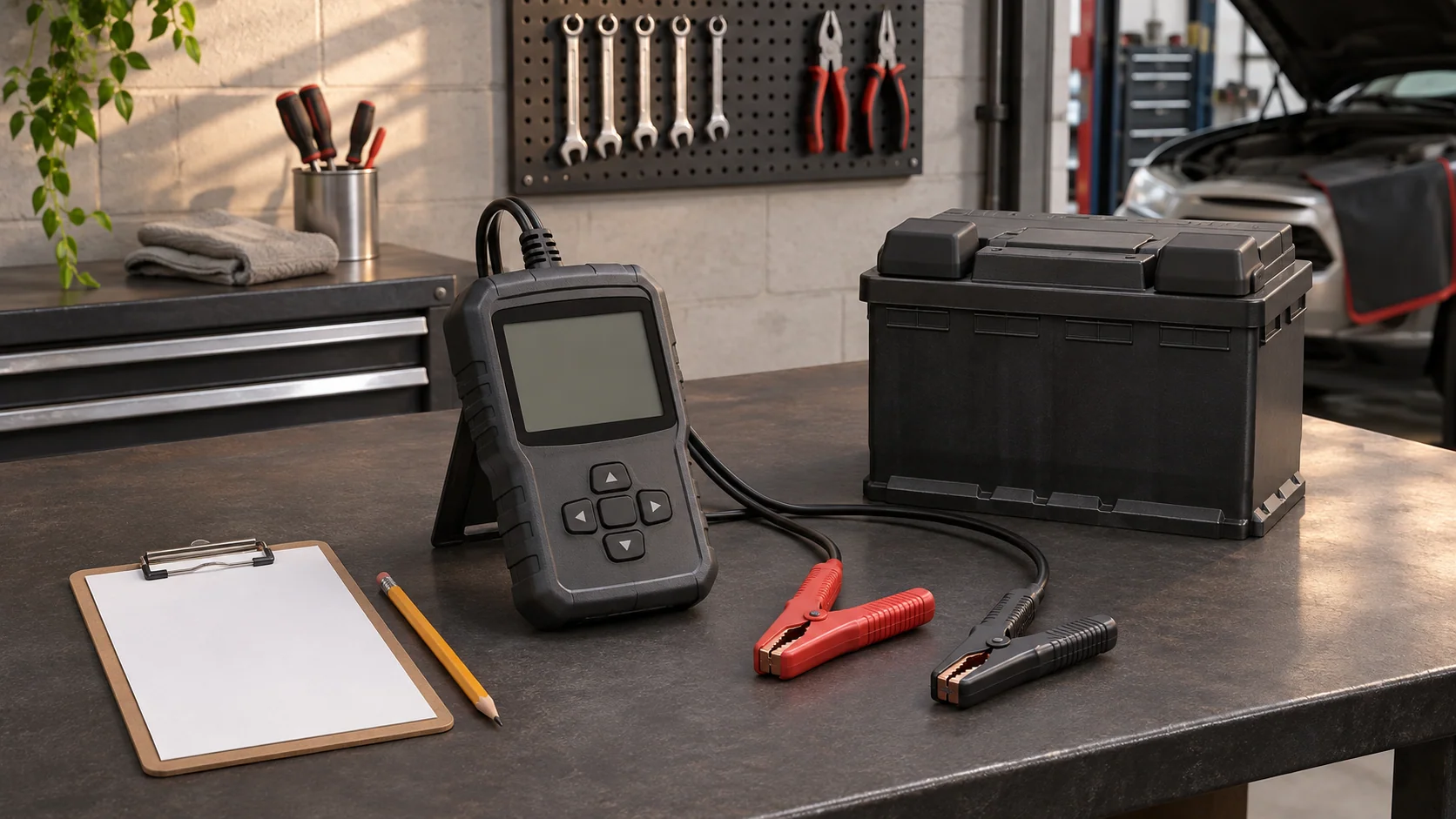
“Battery tester bad connection” can describe two different observations on a repair order: a message on the instrument, or a technician's conclusion about the vehicle. Start by writing which one you actually have. A useful handoff records the displayed words, tester identity and physical connection points before someone changes the setup.
Read the message before assigning a battery verdict
Midtronics' error-message guide explains that tester errors can reflect conditions preventing a valid assessment. It also directs readers to the actual model's manual because message definitions vary. Save the original display or printout and identify the selected test mode. Keep a connection prompt separate from a completed battery-condition result.
For a specific example, the MDX-652P instruction manual, printed pages 8 and 13, connects CHECK CONNECTION and WIGGLE CLAMPS messages with inadequate clamp contact. That explanation belongs to this instrument. An unfamiliar tester needs its own message definition and recovery instructions.
Confirm the actual contact points
The same manual requires both sides of each clamp to make firm contact. Its preparation instructions address appropriate side-terminal adapters and warn against testing at steel bolts. Adapter condition is part of the setup. These details explain why “the clamp is attached” is an incomplete observation: record what its contact surfaces actually touch.
Identify the tester, leads, clamps and any adapter before using the applicable inspection and connection procedure. Follow the tester's safety instructions and the vehicle's requirements before handling terminals or changing connections. This record belongs with a supported starting-battery test; it supplies no substitute terminal-service procedure.
A connection message does not localize resistance inside the vehicle wiring. If the customer's concern still needs a cable or starting-system check, name that as a separate pending test rather than turning an instrument prompt into a cable diagnosis.
Make a repeat that another technician can interpret
Midtronics' discussion of pre-test preparation ties useful results to the vehicle history, visual inspection, battery preparation and correct test inputs. Preserve those conditions when recovering from a contact problem. Record recent charging, relevant temperature information, the selected battery type and rating, and the required vehicle state. Use the applicable instructions to resolve preparation; do not add a generic waiting time or voltage cutoff.
Keep the original attempt and describe each change made before the repeat. If you moved from one physical test point to another, label both locations. If an adapter or lead was changed, identify it. A different result after several simultaneous changes does not isolate which change mattered. Record the remaining uncertainty instead of rewriting the first attempt as a successful test.
Hand off the result and the next question
The original downloadable connection record separates five useful entries:
- Tester model, selected mode and exact displayed message.
- Battery or work-order reference, physical contact points and adapters used.
- Observed terminal, clamp and lead condition, with the applicable instruction reference.
- Preparation and input settings, changes before the repeat, and the separate repeat result.
- Remaining diagnostic question, next required check and responsible technician.
Use the separate battery rating-standard guide for the input-standard question. Attach both attempts to the shop diagnostic report, so the next reader can distinguish a resolved contact prompt from a verified explanation of the customer's complaint.
STEP is inviting repair shops into Early Access. Share how your team keeps test conditions, unresolved questions and the next check visible during a handoff.