
Mechanic Guides
Compression Test vs Leak-Down Test: Use the Result to Choose the Next Check
Compare cranking pressure with cylinder leakage testing, document setup differences, and avoid turning one result into an unsupported engine repair diagnosis.
Published · 5 min read
Quick answer
A compression test measures pressure developed during cranking. A leak-down test evaluates sealing with regulated air under specified stationary test conditions. They answer different questions; record both the setup and result before deciding what a disagreement means.
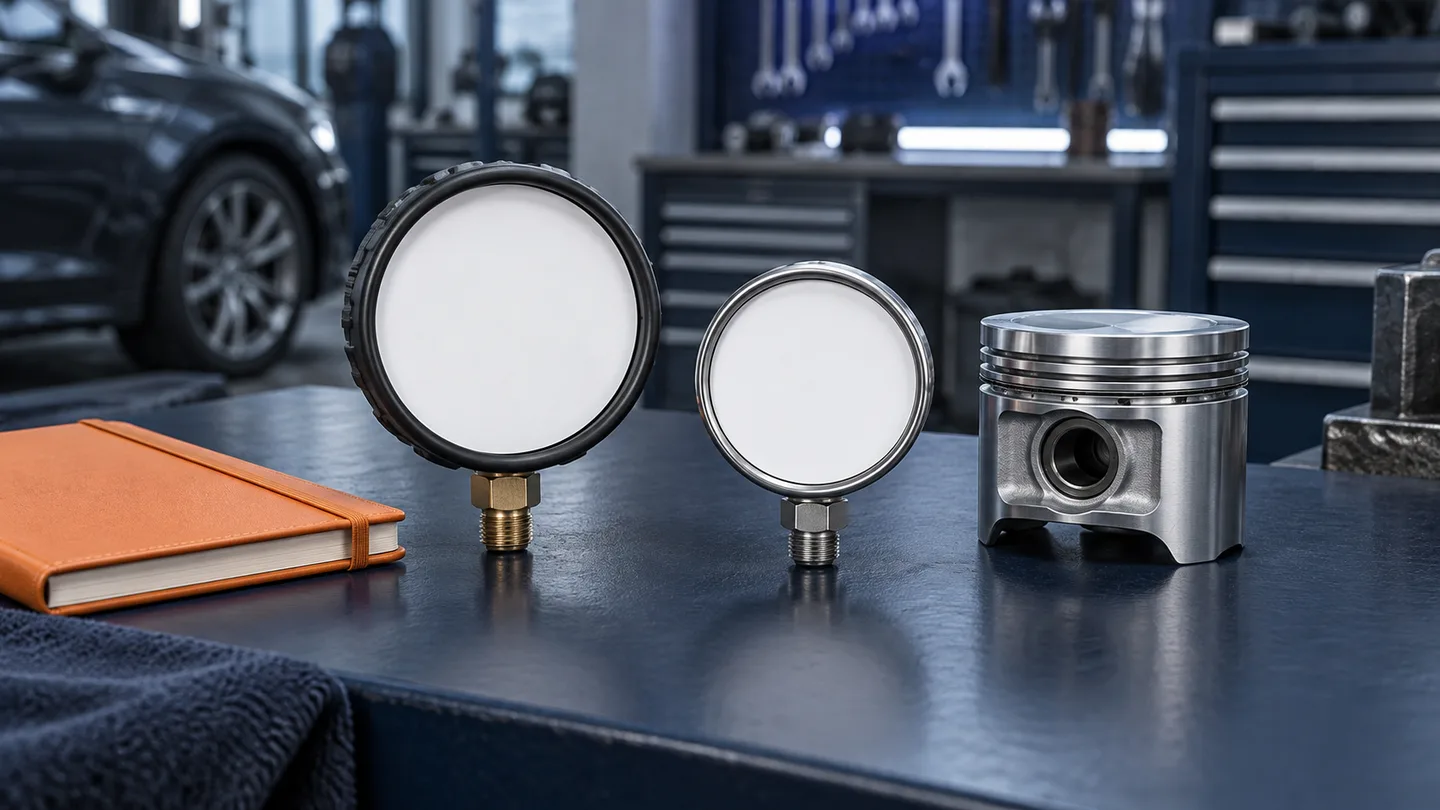
A low compression reading can justify another test without yet justifying engine disassembly. The next question is what the result actually established: reduced pressure during cranking, leakage under a stationary test condition, or both.
Compression and leak-down results should be recorded separately. One is not a different unit for the other, and neither should be reduced to a repair-order note that only says “engine bad.”
Compression testing measures developed pressure
A manual compression test records pressure produced during cranking under the specified procedure. Equipment, engine preparation and measurement conditions matter. Navistar's historical May 2013 manual compression bulletin provides one engine-specific example of prescribed tooling and gauge readings.
Use the current procedure for the actual engine. Do not transfer its access method, cranking requirements or other instructions from a different engine family. Record pressure units and the applicable acceptance criterion with the measurement.
Relative compression is a separate comparison method. If that is the only test completed so far, label it accurately; see relative compression versus measured compression.
Leak-down testing examines sealing under another condition
A leak-down test introduces regulated air with the engine positioned as the applicable procedure requires. It can help investigate where air escapes under that condition. Subaru's historical October 2022 technical newsletter, pages 10-11, emphasizes setup, equipment differences and the possibility of low cranking compression without an observed leak-down loss.
Keep that distinction narrow: a stationary sealing observation does not reproduce every condition of a cranking or running engine. A disagreement between tests needs investigation; it is not a reason to discard one result automatically.
Record the setup before comparing numbers
Build a paired record rather than one pass/fail box:
- Compression: procedure, equipment, preparation, relevant engine conditions, cylinder identity, pressure and units.
- Leak-down: procedure, tester identity, required setup and reference checks, cylinder position, input conditions and reported result.
- Comparison: which criterion applies to each method, what conclusion each supports, and which question remains open.
Do not assume that a leakage percentage from one instrument can be compared directly with a reading from another setup. Preserve the equipment and procedure details needed to interpret it. This guide intentionally supplies no universal pressure, percentage or cylinder-to-cylinder limit.
If you repeat a measurement, record changes in equipment or conditions. A result produced after a setup correction should be identified as such, rather than replacing the original entry without explanation.
Treat compressed air as a source of engine movement
The Subaru document warns that pressurizing a cylinder can rotate the crankshaft and that crank-turning tools must be removed. Follow the current vehicle and equipment procedures for positioning and controlling the engine, applying and releasing air, and avoiding unexpected movement.
This comparison is for trained technicians and is not a step-by-step setup procedure. Do not improvise adapters, substitute an arbitrary shop-air pressure, or use the text as authorization to work on fuel or high-voltage systems. Complete the engine-specific precautions before either test.
Let the evidence choose the next question
If pressure is below the applicable criterion, document that finding first. If the prescribed diagnostic path calls for leak-down testing, record its result and any observed leakage location independently.
The remaining question may be the physical cause of a confirmed abnormality, whether the conditions were correct, or why the two tests do not agree. Follow the relevant diagnostic procedure to distinguish those possibilities. A percentage alone does not name the damaged component or establish the scope of repair.
The existing diagnostic process checklist can help keep the complaint, test question and supported conclusion together without substituting for the engine procedure.
Fictional example: results that disagree
An imagined shop records pressure below the applicable limit during an approved compression test. A subsequent leak-down result does not show the loss the technician expected.
The technician retains both records, checks that the methods and conditions were valid, and follows the engine's next diagnostic step. The customer report explains that the pressure finding is confirmed but the cause remains under investigation. This is a fictional reporting example, not a diagnosis for a particular engine.
Finish with a bounded conclusion
State what was measured, what specification or procedure was used, and what remains unconfirmed. Before recommending a repair, make sure the evidence supports the cause and repair scope rather than only an abnormal test result.
Download the paired worksheet and attach it to the diagnostic report. Shops interested in STEP can request early access.