
Mechanic Guides
Engine Vacuum Gauge Readings at Altitude: Use the Right Pressure Reference
Understand engine vacuum gauge readings at altitude. Separate gauge vacuum from absolute pressure, preserve test conditions and avoid a universal idle-vacuum verdict.
Published · 5 min read
Quick answer
A gauge vacuum reading depends on the local atmospheric reference. Before comparing readings from different elevations, identify the pressure type, units, local conditions and applicable vehicle procedure.
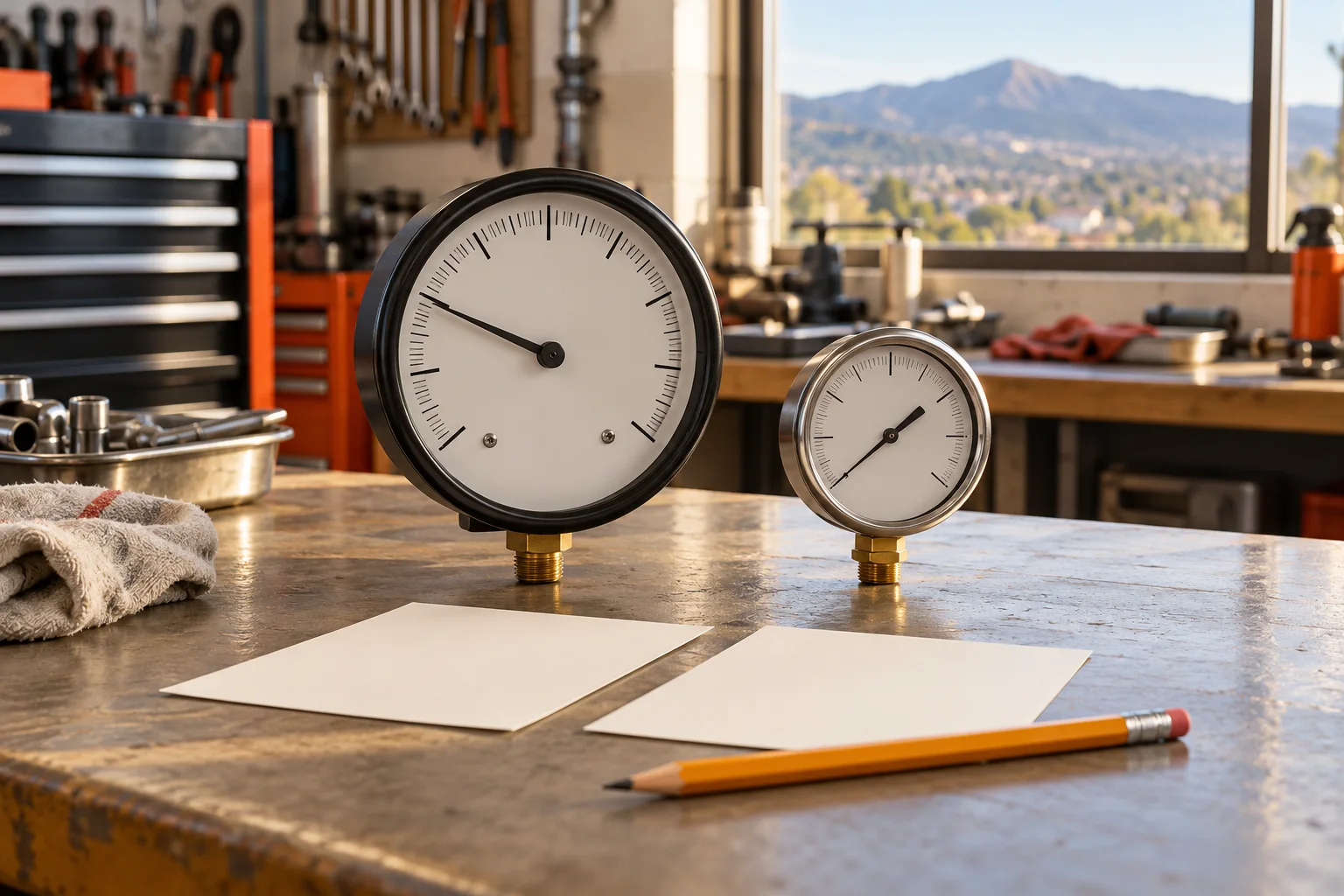
Why the same engine question can produce different numbers
An engine vacuum gauge at altitude needs more context than a familiar sea-level idle range. A lower indication can prompt a useful follow-up, but it cannot name a failed component by itself. First establish what the instrument measures and whether the comparison belongs to the same vehicle configuration and operating condition.
The Mityvac Vacuum Gauge & Fuel Pump Tester instructions explicitly identify both engine design and altitude as influences on numerical readings. The document also emphasizes needle behavior and information from multiple sources. Its generic examples are not a replacement for the applicable vehicle procedure.
Gauge vacuum and absolute pressure use different zero points
WIKA's explanation of pressure types defines gauge pressure relative to the surrounding atmosphere and absolute pressure relative to vacuum. Atmospheric pressure changes with elevation and weather. An absolute-pressure instrument has a different reference; this does not mean the actual pressure inside a running engine must stay constant when conditions change.
Below atmospheric pressure, signed gauge pressure is negative. A conventional vacuum scale may instead show the positive magnitude of that difference. Identify the instrument's convention before comparing it with a value labeled absolute. Matching units alone does not resolve a different zero point.
For the same pressure location and moment, vacuum magnitude can be expressed as local atmospheric absolute pressure minus the measured absolute pressure, with both values in the same units. This is a reference conversion, not an altitude correction for engine condition.
Consider an arithmetic illustration, not vehicle data: 100 kPa absolute ambient pressure and 40 kPa absolute measured pressure give a vacuum magnitude of 60 kPa. If ambient pressure were 80 kPa absolute while the measured pressure were still 40 kPa absolute, the difference would be 40 kPa. Holding that measured pressure constant only illustrates the reference change; it does not predict an engine's response to altitude.
Do not turn a rule of thumb into a repair decision
The Mityvac sheet includes an altitude rule within its generic running-test discussion. Applying a convenient subtraction to every engine would lose the document's own qualifications about engine design. Retrieve the specification and test conditions that actually apply before deciding whether an observation meets a requirement.
A conversion cannot make unlike tests equivalent. If one result came from a different operating state, a different connection or an unidentified pressure reference, document the mismatch. Do not alter the original reading until it resembles an expected number.
The next useful question is specific: is the difference explained by a reference convention, by unmatched test conditions, or does the applicable procedure require another check? Keep those possibilities open until evidence resolves them.
A comparison worksheet that preserves the missing context
The downloadable worksheet provides separate fields for:
- Vehicle and engine configuration, complaint and applicable procedure reference.
- Instrument identity, measurement location, units and pressure reference convention.
- Original indication, observed range and needle behavior over the observation interval.
- Operating conditions required by the procedure and any conditions not established.
- Local atmospheric pressure if available, its units, source, time and measurement location; otherwise mark it unknown.
- Comparator source, differences in conditions, any derived calculation and the unresolved next check.
Keep the original reading beside any calculated value. An elevation estimate is not a measured local atmospheric pressure. If the reference information is missing, leave a clear limitation rather than manufacturing a precise correction.
This worksheet documents a permitted test. It does not specify a vacuum connection, authorize disabling a system or supply an engine-running procedure. Use the vehicle and equipment instructions for those decisions and for protection around hot or moving components.
Make the handoff useful to the next technician
For a service that receives work from another region or another technician, a note such as “vacuum low” is incomplete. A better handoff names the instrument reference, the original observation, the applicable comparison and the unresolved condition. This lets the next person decide which information to obtain before repeating work.
The pressure-transducer setup guide addresses a related documentation problem: equipment context belongs beside a pressure result. It concerns a different test and supplies no interchangeable engine-vacuum limit.
Request STEP Early Access and share how your shop keeps vehicle context, source information and the next diagnostic check together.
Sources and review limits
This is source-based editorial analysis using the identified Mityvac instructions and WIKA pressure definitions. The arithmetic example and worksheet are original explanatory material. No vehicle test was performed, no universal idle range is prescribed and no component diagnosis is made.