
Mechanic Guides
Pressure Transducer Hose Volume: Check the Setup Before Comparing Compression
Record pressure transducer hose volume, adapters and software compensation context before comparing compression results. Includes a setup record.
Published · 5 min read
Quick answer
Identify the sensor, hose, adapters and software test path before comparing compression results. Use applicable manufacturer volume information and preserve original readings separately from derived values.
Why matching pressure units are not enough
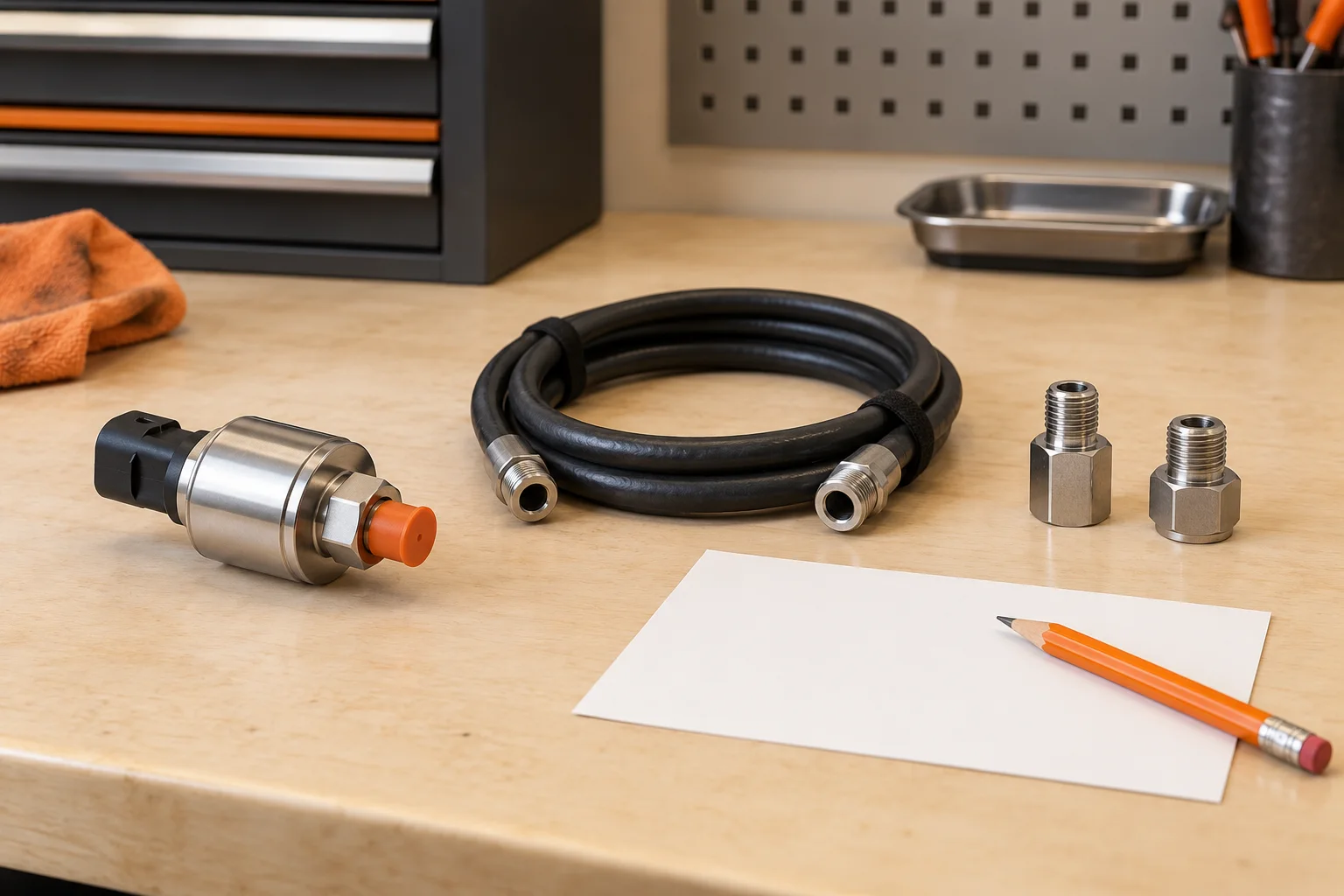
Pressure transducer hose volume belongs in the compression-test setup record. Before comparing a captured cylinder-pressure result with a conventional gauge reading, identify the sensor, hose, adapters and software test path. A shared unit such as psi or bar does not establish that two results were obtained by equivalent methods.
In a Pico staff discussion begun in 2017, Steve Smith explains why added sensor and hose volume matters when evaluating peak cylinder pressure. The thread also distinguishes a pressure waveform capture from a conventional gauge that retains pressure through a check valve. These are tool-specific explanations, not a vehicle acceptance procedure.
Follow the correction, not the first number
The same thread contains a later correction. In his November 3, 2018 reply, Smith acknowledges that the earlier internal-volume figure was mistaken and supplies corrected information. Copying only the first post would lose that qualification.
No historical volume or correction multiplier from the discussion is prescribed here. Obtain the applicable information for the actual sensor, hose and adapters. If that information is unresolved, retain the original result and mark its comparison limits rather than assigning a convenient volume.
Identify what the software actually did
The published PicoDiagnostics User's Guide, revision pd.en-19, describes absolute-compression options for cylinder volume, compression ratio and sensor volume. It directs the user to the sensor manufacturer for volume information and advises against changing the field when uncertain.
That document describes its own software workflow. It does not prove which features or defaults are present in an installed version today. Save the software name, version, test mode, compensation state and entered values with their sources. Do not infer that compensation was applied because the output is displayed in pressure units.
Build a comparison you can defend
First write the question the test must answer. Is the shop preserving a pressure waveform, comparing repeated captures, or assessing a result against an applicable compression requirement? Retrieve the required vehicle procedure before judging the part.
Then identify both measurement paths. “Compression tester” is too broad for the record. Name the tool, hose and adapters on each side of a comparison; distinguish the original indication from any derived value. Keep the source and assumptions of a calculation beside it.
When results disagree, do not correct one simply until it matches the other. Check whether the procedures, configurations and operating conditions support the comparison. An unexplained disagreement is a reason to resolve the method, not evidence by itself that the engine or sensor is defective.
Original setup record
Use the downloadable record to preserve:
- Vehicle, engine, cylinder and applicable procedure reference.
- Sensor model and ID; hose and adapter identities.
- Volume information, units, source and unresolved items.
- Software version, test mode and compensation settings.
- Original capture or reading; derived result and calculation reference, separately.
- Comparator method, comparison limits and next authorized check.
This record is a documentation aid. It is not a method for measuring internal volume, a correction calculator or a cranking procedure. Follow the vehicle and equipment instructions for setup, disabling and safe testing.
Preserve the result's meaning at handoff
The relative compression versus compression-test guide separates relative percentages from measured pressure. The compression versus leak-down guide distinguishes different test questions. This article adds equipment-volume and software context to that handoff.
For an independent shop, the useful next step is a specific unresolved check with the original evidence still available. Request STEP Early Access to follow its development for mechanic workflows. No compression compensation, pressure acquisition or automated verdict capability is claimed for STEP here.
Sources and review limits
Sources are the identified Pico guide and staff discussion, including the later correction. This is source-based editorial analysis with an original record design. No physical compression test was performed and no universal pressure limit is supplied.