
Mechanic Guides
Parasitic Draw and Module Sleep Time: Record the Shutdown Before Blaming a Module
Separate shutdown activity, wake events and persistent key-off current with a time-based diagnostic record for professional repair shops.
Published · 5 min read
Quick answer
A key-off current reading only makes sense alongside elapsed time and vehicle state. Confirm the vehicle-specific shutdown procedure, record wake events, and compare stabilized current with the applicable specification before isolating a circuit.
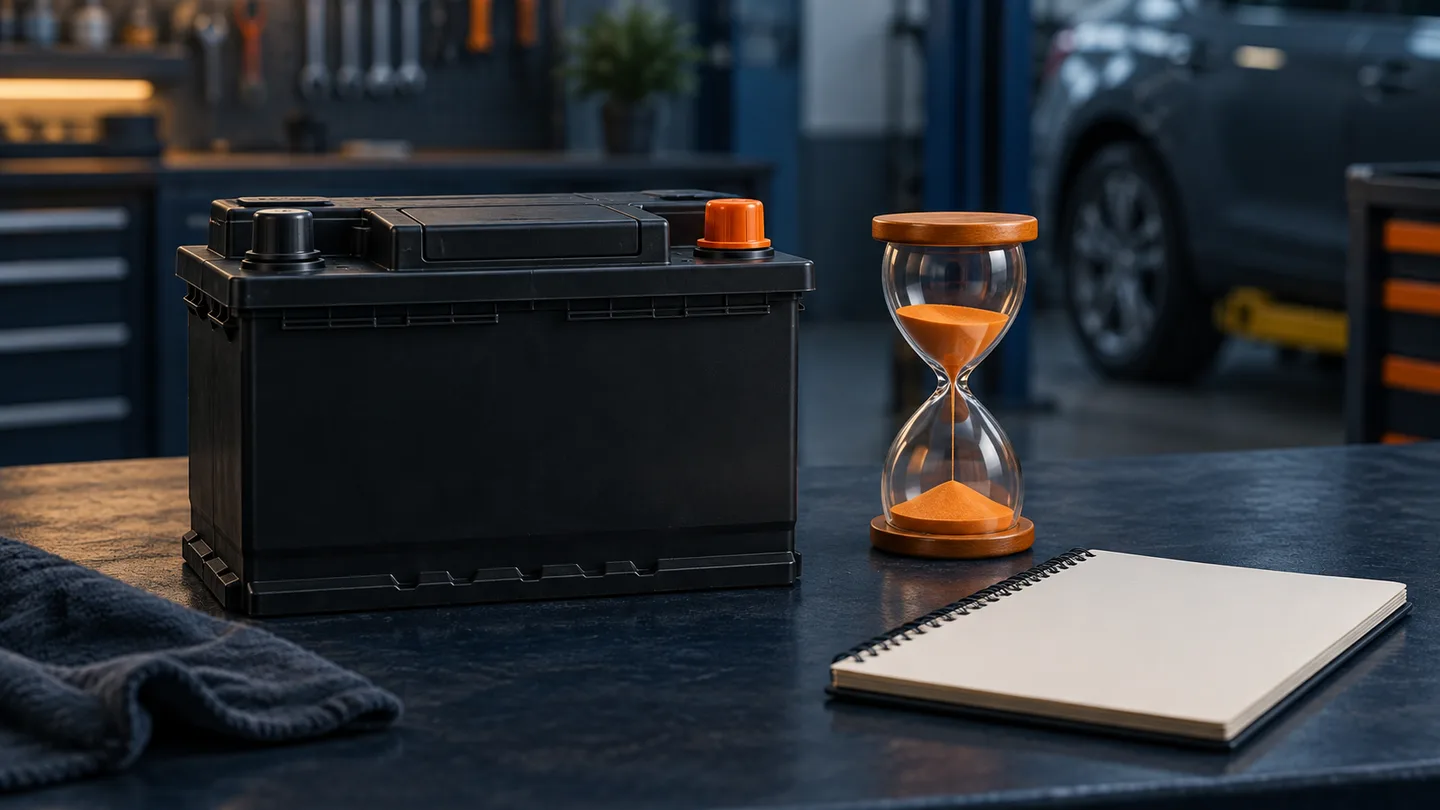
A battery is discharged after parking. In the bay, current remains visible after the ignition is switched off. The useful question is whether that current belongs to an expected shutdown sequence, a wake event, or a load that persists beyond the vehicle's specified behavior.
Record time and state together. A current value without the conditions that produced it can send the next technician toward the wrong circuit.
Why ignition off is not the end of the test setup
Modules do not necessarily finish their work together. In its historical May 2020 technical newsletter, Subaru describes telematics activity after key-off, remote-service wake events, and other modules that can require longer shutdown periods. The article directs technicians to the applicable service information for the required wait.
That example supports a narrow conclusion: one module's timer does not establish that the whole vehicle is asleep. It does not supply a wait time for every Subaru, much less every vehicle entering an independent shop.
GM's mid-December 2020 technical newsletter also describes staggered shutdown and periodic wake activity. Use these historical examples to understand why timing matters; obtain the current procedure for the actual vehicle before deciding what is abnormal.
Build a timeline that another technician can repeat
Before starting, identify the vehicle, equipment configuration and complaint. Record how long it was parked, whether the concern repeats, recent work and any accessories connected while parked. Keep the battery-condition investigation separate from the current-draw observation; the two answer different questions. See battery conductance versus load testing.
Use the following as a documentation plan alongside the prescribed test method:
- Write down the service-information reference and its required shutdown conditions, observation period and acceptance criteria.
- Record ignition-off time and the initial vehicle state: key location, access panels, locks and connected equipment.
- Log current readings with elapsed time and units, rather than copying a single peak into the repair order.
- Mark every intervention, including access to the vehicle, connection changes and circuit isolation.
- If an intervention changes the test conditions, repeat the required stabilization sequence and label the next observation separately.
The goal is a reproducible record. Do not call a quiet moment a completed sleep cycle unless it meets the applicable procedure's criteria.
Keep the measuring method inside its limits
This worksheet does not prescribe a universal meter connection. Select the approved method and equipment for the vehicle, including current range, protection and resolution. Follow the equipment instructions and vehicle battery precautions. Never attempt engine cranking through a handheld meter's series current input.
Record whether the reading came from a clamp, an approved series arrangement or another prescribed method. Include range and zeroing information where applicable. A change in the measurement setup can make two readings unsuitable for direct comparison.
For hybrid and electric vehicles, do not extend a low-voltage battery observation into high-voltage testing. Follow the vehicle-specific service procedure and required qualifications.
Separate an observation from a diagnosis
Three statements should remain distinct in the repair order:
- Observed: what the instrument showed and when it happened.
- Compared: which vehicle-specific criterion was applied under which conditions.
- Concluded: what that comparison supports and what still needs testing.
Removing a fuse and seeing a change is an observation worth preserving. It is not, by itself, proof that every component supplied by that fuse is faulty. Record the circuit, the intervention time and the subsequent vehicle state before moving to component-level diagnosis.
Avoid writing “module will not sleep” when the only evidence is a reading taken before the specified wait. A more useful note is “shutdown observation incomplete; next check requires an undisturbed observation interval under the referenced procedure.”
Fictional example: an interrupted observation
An imagined shop begins a key-off test, then opens a door to retrieve the repair order. Current changes. The technician marks that event instead of combining the readings before and after it into one unexplained result.
After restoring the specified conditions, the technician starts a new observation interval. The second record can be assessed against the procedure. The first still has value because it explains why the initial observation could not support a conclusion. This is an illustration of record keeping, not a reported repair or a normal-current specification.
Close the loop after repair
Repeat the relevant observation under comparable documented conditions. Record the actual duration and result, plus any limitation in reproducing the customer's parking pattern. An undisturbed bay check cannot automatically prove that an intermittent overnight complaint is resolved.
Attach the worksheet to a diagnostic report, preserving the difference between measured evidence and an unresolved hypothesis. If your shop wants to follow STEP's development for diagnostic work, request early access.