
Mechanic Guides
Smoke Machine Flow Meter: Keep Flow, Pressure and Leak Location Separate
Interpret a smoke machine flow meter with its tool and test context. Keep flow, pressure, vapor location and repair verification in separate record fields.
Published · 5 min read
Quick answer
Keep flow indication, pressure behavior and visible vapor location separate. Use the exact machine instructions and applicable vehicle procedure before making a repair or verification conclusion.
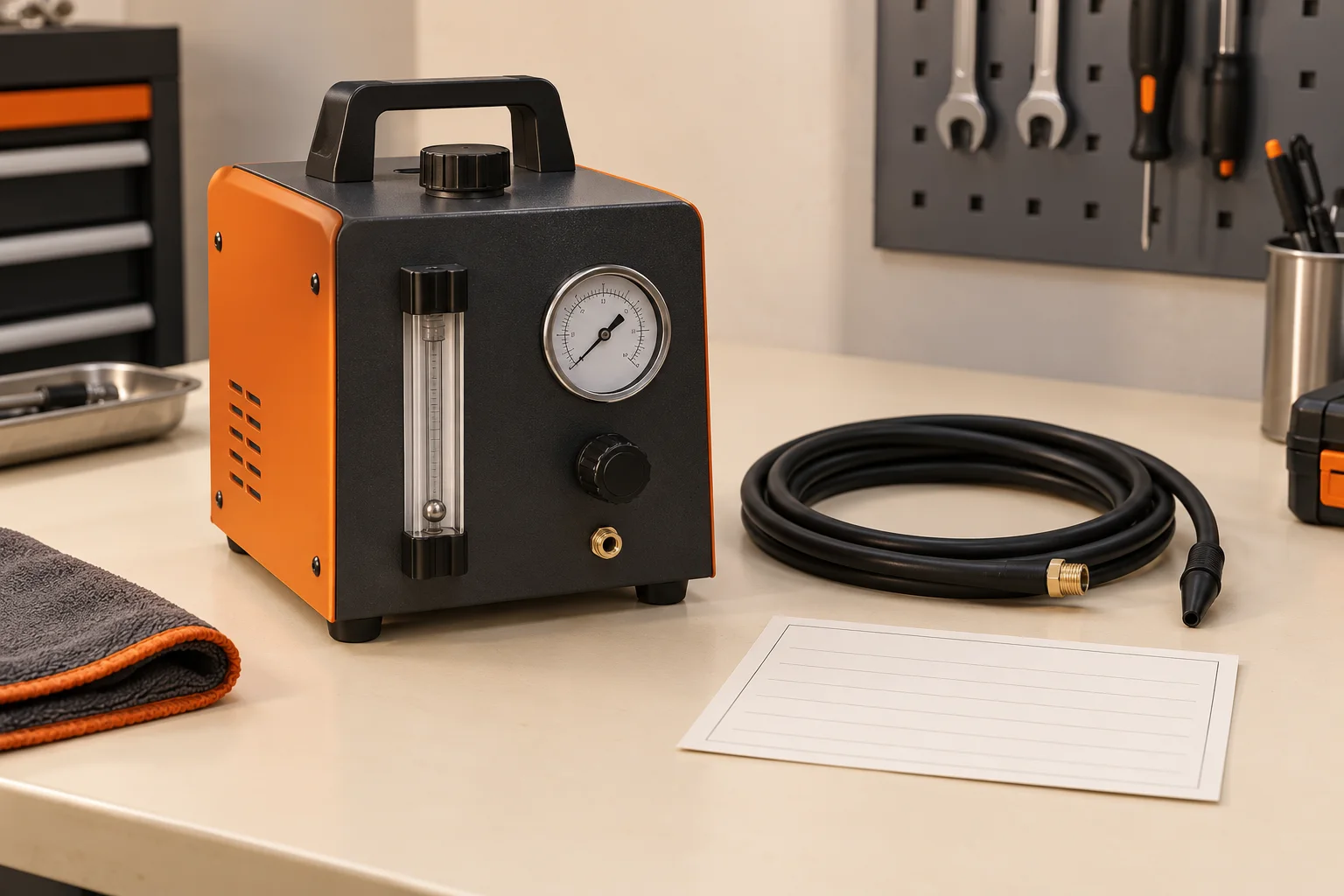
Three observations, three different questions
A smoke machine flow meter indicates flow; it does not identify the leaking joint by itself. Keep the flow observation, pressure behavior and visible vapor location as separate evidence before writing a repair conclusion.
Redline's replacement-flow-meter description calls leak sizing an approximation and lists compatible equipment. A scale mark therefore needs its tool context. Do not treat a ball position copied from another machine as an interchangeable measurement.
Read the machine's method before interpreting the ball
The Smoke Pro Total-Tech 95-0050 manual, available through Redline's manuals page, treats flow indication, visual leak location and pressure decay as distinct parts of its workflow. It also notes that not every system is designed to be completely sealed.
Those instructions apply to the identified machine. They are not a universal pressure setting, valve sequence or vehicle pass/fail rule. Read the applicable vehicle procedure for the system being tested, including its prescribed connections, isolation, equipment and acceptance conditions.
This article concerns interpreting and documenting a permitted test. It does not authorize pressurizing a system, substituting a supply gas or fluid, operating a valve, or increasing pressure to make a leak easier to see.
Give each observation its own place in the record
For flow, preserve the original indication with the machine model, scale or units, operating mode and test phase. A note saying “ball moved” leaves the next technician without the context needed to interpret it.
For pressure, preserve the original value and units plus the relevant timing and control state required by the procedure. Keep a pressure-decay observation separate from the flow reading. Do not silently translate one into the other.
For location, record exactly where vapor was observed, if any. A photo should identify the component and observed exit point. If no location was established, write that; do not convert “flow observed” into a named failed seal.
A disagreement is an unresolved question
Consider an invented handoff note: “Flow indicated; no vapor exit location documented.” That supports a follow-up question about the permitted test setup and observation. It does not identify a component for replacement.
A second invented note says: “Pressure changed, but required isolation state was not recorded.” Preserve that limitation. Repeating the approved test with the missing context documented may be necessary before comparing the result with a requirement.
Neither example is a real reading or a diagnosis. The point is to keep the observation distinct from the conclusion that still needs support.
Original leak-test observation card
The downloadable card keeps these fields together:
- Vehicle, system and applicable procedure reference.
- Machine model and ID; mode, approved setup and test phase.
- Original flow indication with scale or units and observation timing.
- Original pressure or decay observation, units and required control state.
- Visible vapor location, photo reference or location not established.
- Applicable acceptance requirement, repair verification and unresolved next check.
Use a new entry for a repeat, identifying what changed and why. Do not overwrite the earlier observation after a repair. Keep the verification method attached to its own result rather than treating a cleaner-looking flow indication as a complete repair record.
Make the handoff actionable
An independent shop needs the next technician to see both what was observed and what remains uncertain. This card works as a standalone record. For related evidence preservation, see the intermittent electrical-fault workflow; the tests differ, but a clear record still separates a result from the next question.
Request STEP Early Access to follow its development for mechanic workflows. No smoke-machine integration, automated leak sizing or repair-verification capability is promised here.
Sources and review limits
Technical distinctions are bounded to Redline's identified product description and model 95-0050 manual. The examples and card are original editorial material. No smoke test was performed, and this article supplies no universal leak allowance or vehicle-specific procedure.