
Mechanic Guides
Torque Wrench Storage Setting: Follow the Tool, Keep the Record
Choose a torque wrench storage setting from the actual model instructions. Keep storage actions separate from calibration evidence and the next tightening job.
Published · 5 min read
Quick answer
Identify the exact wrench and follow its storage instructions. A completed reset or storage action does not verify calibration or approve the next tightening job.
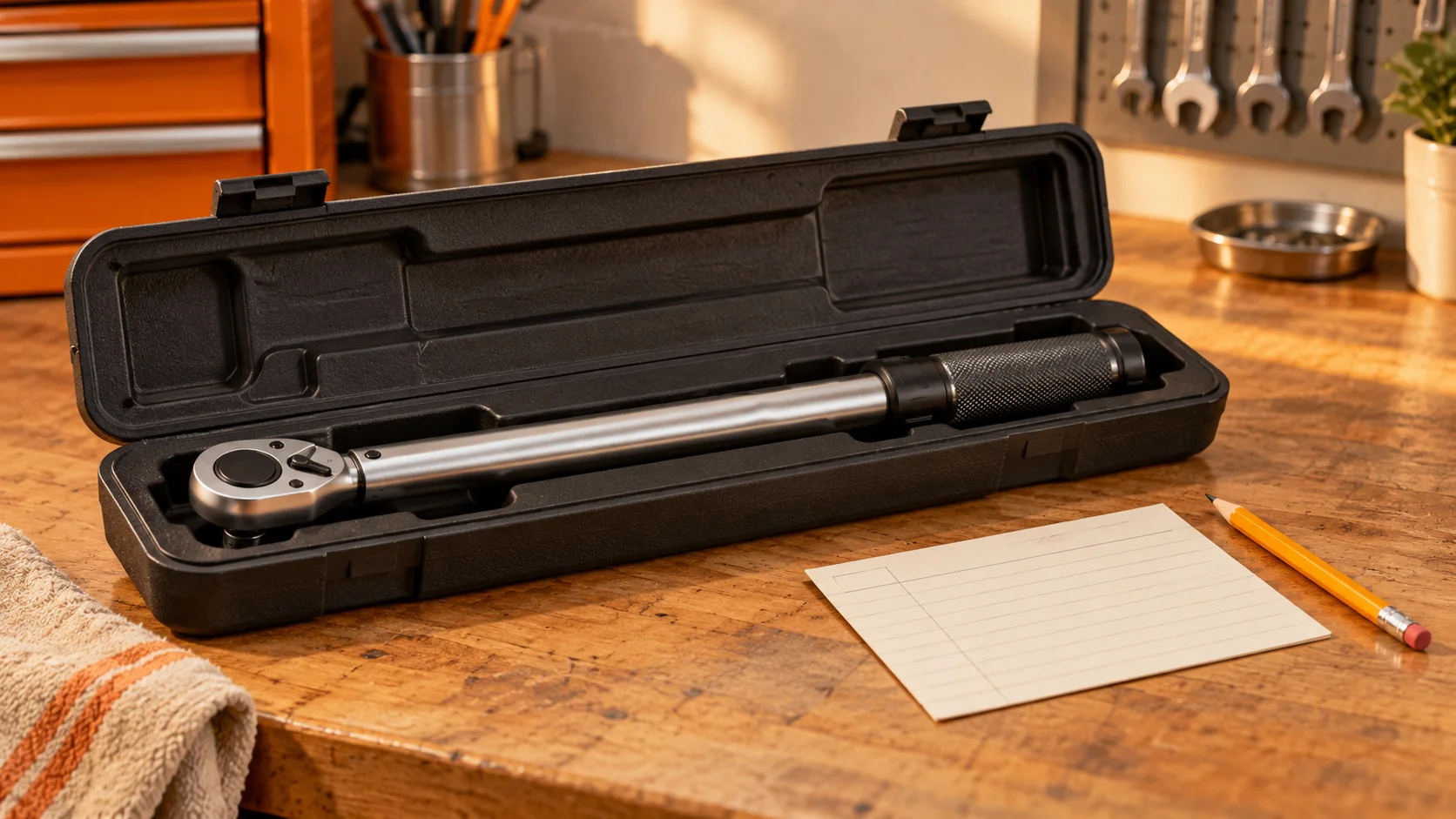
A shop needs a storage rule that belongs to the actual torque wrench. The phrases "wind it back," "leave it set" and "return it to zero" are not interchangeable instructions for every mechanism. Start with the manufacturer, model and current instructions before choosing a setting.
Keep another question separate: what evidence supports this tool's calibration status? Putting a wrench away correctly is care of the instrument; it does not itself verify the torque it will deliver on the next job.
Why a universal reset rule is unreliable
Norbar's storage discussion reports that unwinding a Norbar torque wrench to its minimum setting did not affect calibration in the manufacturer's testing. Treat that as a statement about its tools and testing, not permission to ignore another wrench's instructions.
STAHLWILLE's listed Service MANOSKOP product provides a different design-specific explanation: its measuring element is loaded while force is applied, so that product does not require a reset to zero. A tool that clicks is therefore not identified well enough by the word "click" alone.
These examples answer the storage query by exposing the missing input: the actual instrument. Neither statement establishes a setting for an unidentified wrench. A shop rule should point to the model's instructions instead of assigning one number to the entire drawer.
Turn the instructions into a tool record
Use an original storage-and-status card for each wrench. Keep the tool's identity attached to the instruction so the card still makes sense when someone moves the case or borrows the tool.
- Shop tool ID, manufacturer, exact model and serial number if available.
- Instruction document, revision or access date, and where the shop keeps it.
- Manufacturer's required storage setting or an explicit no-reset instruction.
- Other required storage conditions and the person who completed the return check.
- Current calibration record reference and the shop's next review date.
- Any unresolved damage, overload, drop or abnormal-operation report.
Do not fill an unknown instruction field with zero because that sounds conservative. Write "storage instruction unresolved" and locate the applicable document. Do not force an adjuster beyond its documented range to achieve an assumed zero.
Separate three kinds of entries
A useful record distinguishes an instruction, an action and evidence. For example, an invented entry could read: "Model instruction retrieved; documented storage action completed; calibration certificate reference still to be reconciled."
That entry deliberately leaves the last question open. A completed storage action cannot fill a missing calibration record. Similarly, a certificate reference does not show that the wrench was returned in the required condition today.
Norbar's current FAQ connects maintenance with inspection, storage and manufacturer guidance, and describes regular calibration as part of reliable torque application. It does not supply one universal calibration interval for every tool and shop use pattern. Use the applicable tool requirements and the shop's controlled process for that decision.
Handle an uncertain return without inventing a result
If a wrench returns with an unclear setting or an incident report, preserve the observation before deciding its next use. Record what was actually reported, the tool ID, who reported it and the time. An unknown setting is not proof that calibration changed; an absence of visible damage is not proof that it remained correct.
Route the question through the manufacturer's guidance and the shop's tool-control process. This article does not prescribe a home calibration adjustment, a substitute load test or a universal inspection threshold. Keep the tool's status unresolved until the required evidence is available.
For a handoff, distinguish "storage action completed" from "approved for use under the shop process." That wording prevents the next technician from treating a housekeeping entry as a metrology result.
Before the next tightening job
The storage card does not replace the vehicle's tightening procedure. Tool range, units, attachments, direction of use and the required sequence still belong to the job's applicable instructions. A wrench being in its case does not establish any of those inputs.
For attachment geometry, the separate crowfoot correction guide explains a different question. Use it for documenting geometry; keep the storage and calibration-status record with the tool.
The downloadable card is a documentation aid. It is not a calibration certificate, a service interval or evidence that a particular fastener was tightened correctly.
See STEP's diagnostic methodology and editorial policy. Shops interested in sharing their evidence and handoff needs can request Early Access. This guide does not claim that STEP calibrates tools or approves a tightening operation.