An engine controller needs a credible picture of the air around the vehicle as well as conditions inside the intake manifold. On the Honda Accord 2.4 gas engine, barometric pressure information helps provide that outside-air context. A BARO circuit code identifies an abnormal electrical input, not an unusual weather condition or proof that an external pressure sensor needs replacement.
This educational overview covers the 2010–2017 Honda Accord 2.4 gas profile. Sources at the first and last years support the functional explanation, not identical engine equipment, module hardware, software, connector assignments or service procedures for every build. Confirm the exact engine and configuration. The applicable service information controls diagnostic limits, module identification, testing, programming, replacement and repair verification.
What BARO measures and how it is used
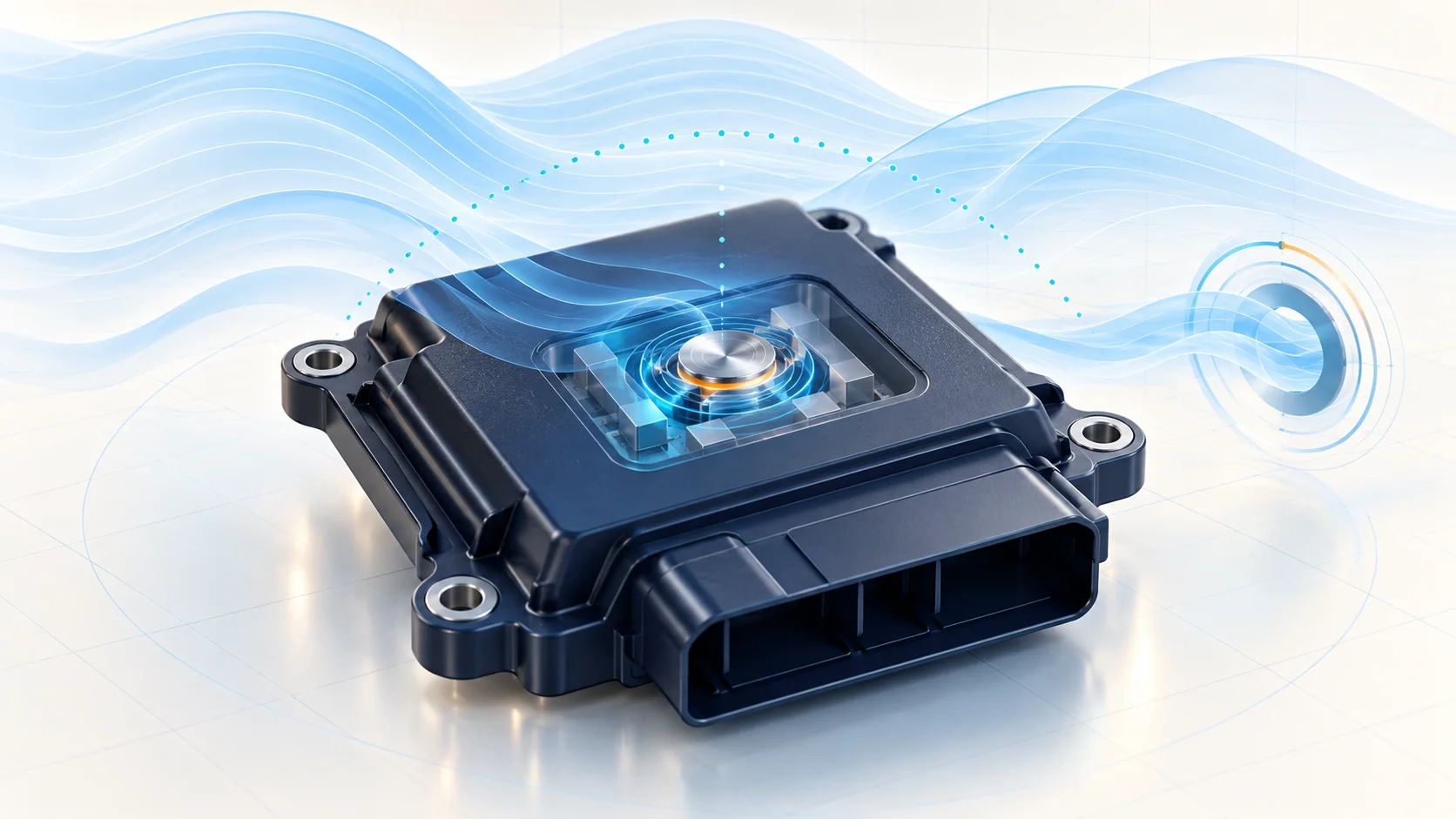
The barometric pressure sensor monitors atmospheric pressure. In the endpoint applications examined, it is built into the engine control module or powertrain control module rather than being a separately wired external sensor. That construction matters: a generic pressure-sensor picture is not a reason to search for a three-wire BARO connector or probe an unrelated sensor.
The controller uses BARO output together with manifold absolute pressure, or MAP, sensor output to estimate appropriate intake airflow. These are different pressure references. BARO describes the surrounding atmosphere; MAP describes the intake manifold. Their useful comparison depends on the operating condition and the applicable diagnostic method. This overview does not supply a universal MAP-to-BARO tolerance.
A scan parameter is the controller's reported interpretation of an input. A voltage-related BARO parameter and a pressure-valued parameter, where available, are not interchangeable units. Neither automatically becomes an independent reference measurement merely because it appears plausible on the scan tool.
Low and high circuit codes are not altitude diagnoses
| STEP guide | Diagnostic direction | What the code alone does not prove |
|---|---|---|
| P2228 — BARO circuit low voltage | The controller reports a BARO signal below the applicable electrical diagnostic limit. | That local atmospheric pressure is genuinely too low, or that an external sensor should be replaced. |
| P2229 — BARO circuit high voltage | The controller reports a BARO signal above the applicable electrical diagnostic limit. | That altitude, manifold pressure or another intake component has been identified as the cause. |
The linked guides preserve their published URLs. Their exact signal limits, ignition modes and module-related steps remain subject to the procedure for the vehicle being repaired. Do not turn one threshold from a guide into a calibration for every model year, or interpret the words low and high as direct physical pressure measurements.
Failure categories and symptoms
The warning light may be the main complaint. General drivability changes may also be reported, while some vehicles can feel normal or show only an intermittent fault. Neither a normal-feeling engine nor a stored code is a complete assessment of the input.
The relevant categories include an abnormal internal BARO signal, a controller input/internal-circuit concern, module connection or terminal condition, and a software-related path where the exact chart directs it. Because the sensor is integrated in the examined applications, diagnosis is not the same as substituting an arbitrary external transducer.
Other intake, MAP, supply or engine-control faults may coexist. They deserve their own diagnostic evidence rather than being renamed BARO failures. A MAP sensor replacement does not establish that a BARO electrical fault has been corrected, and a BARO code does not by itself establish an intake leak.
A practical diagnostic strategy
- Identify the application and preserve the evidence. Record the exact vehicle, module identification, all codes and their status, freeze data and available snapshots before clearing anything. Note recent module work, the operating conditions and whether the complaint is repeatable.
- Use the correct data definition. Identify whether the displayed BARO value is voltage or pressure. Use the procedure's specified ignition and engine state. A comparison made in the wrong state or with the wrong units can send diagnosis down the wrong branch.
- Separate current from intermittent. Compare the prescribed live parameter with the applicable diagnostic condition. If the fault does not reproduce, retain the original evidence and follow the intermittent-fault path. A normal reading now does not prove that the recorded event was false.
- Check only the supported failure area. Follow the exact BARO chart and inspect module connections where directed. Establish the relevant power, ground and communication prerequisites before module programming or replacement. Do not invent an external BARO harness, disassemble the controller or apply a generic sensor jumper test.
- Treat software and known-good-module work as controlled procedures. The examined charts include these branches when the fault is duplicated. That is not an instruction to replace a PCM from the DTC name alone. Confirm the correct software/application and all required setup, security and installation steps using the applicable service information. An arbitrary used module is not a valid known-good comparison.
- Verify separately from the initial test. After the directed correction, repeat the relevant BARO check and inspect pending and confirmed codes under the prescribed conditions. If the code returns, follow the chart's connection and return-point checks. Investigate other codes separately rather than calling the whole vehicle repaired because one code disappeared.
Do not substitute an unqualified weather report for the specified diagnostic reference. A reference pressure must represent the condition and definition required by the applicable comparison. This overview provides no conversion formula, expected local value or universal reference instrument procedure.
Repair categories and workshop safety
The supported outcome may be correction of a module connection, a directed software update, or module replacement after the diagnostic path establishes the need. Required initialization, matching and relearn work must be completed for the exact application. The article does not specify which setup operations apply to every Accord in this range.
Keep module work electrically controlled. Follow the prescribed ignition shutdown and battery-isolation requirements before connector removal, and use the specified power support for programming. Do not disconnect power during a programming operation, bridge unidentified terminals, inject battery voltage into a signal circuit or open the controller to reach its internal sensor. Use suitable static-control and handling precautions where required by the service procedure.
For any running checks, ventilate exhaust and keep hands, clothing and test leads clear of belts, fans and hot components. Do not watch scan data while driving; use safe recording or another technician when road verification is necessary and permitted. A warning light accompanied by unsafe drivability requires a suitable workshop test plan rather than routine road reproduction.
What successful diagnosis establishes
Clearing a code or seeing one plausible BARO value is not completed repair verification. A useful result links the exact application, correctly interpreted data, a valid current/intermittent decision, the supported repair and repeat checks that address the original failure condition.
On this Accord, atmospheric pressure sensing and manifold pressure sensing contribute related but different information. Keep those roles distinct, preserve the integrated-sensor boundary and let the exact diagnostic procedure determine any module-related action.