What this code means
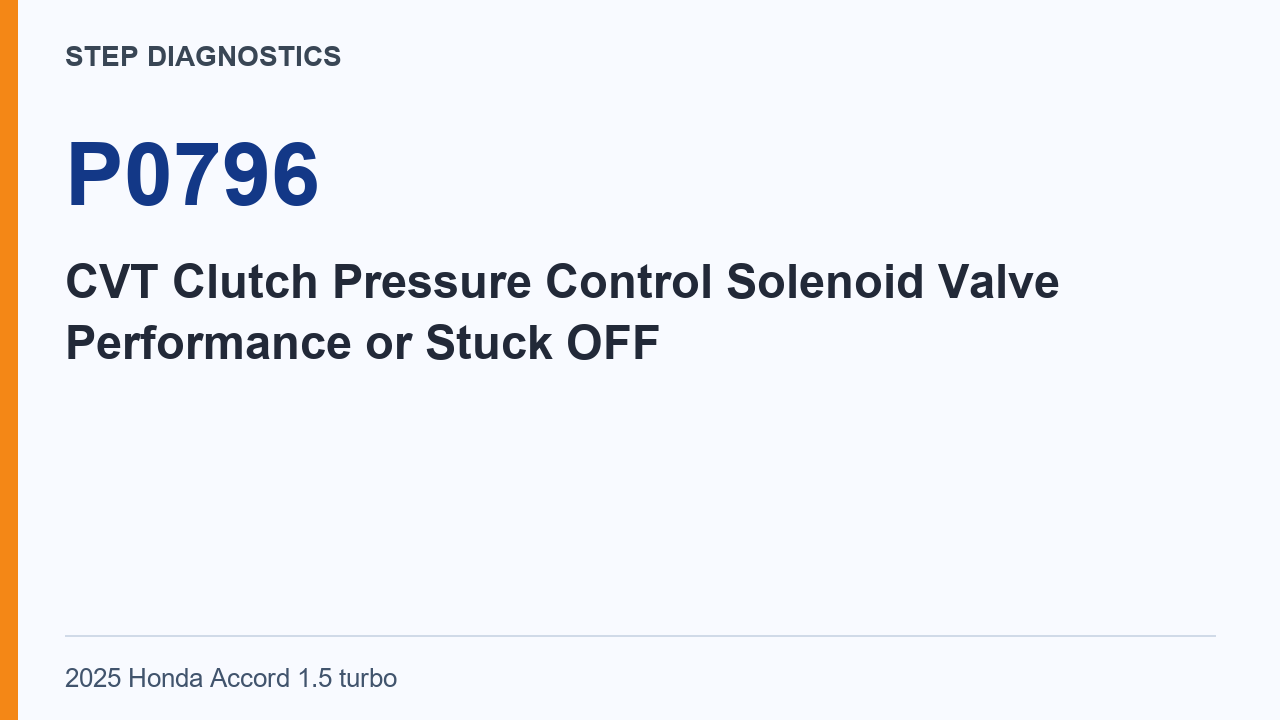
P0796 concerns the solenoid valve that controls CVT clutch pressure. It may have a performance problem or be stuck OFF.
P0796 concerns the CVT clutch pressure control solenoid valve, which may have a performance problem or be stuck OFF. The TCM compares torque converter turbine speed and drive pulley speed under the clutch/brake engagement and vehicle-speed condition described in the procedure. A mismatch leads to the stored code.
The speed comparison explains the monitored issue. The repair and operating sequence below are the work identified for that issue. Keeping those parts connected makes the procedure easier to follow from the code description through the replacement and repeated shift operation.
What the vehicle may do
With the forward clutch/reverse brake engaged under a specified vehicle-speed condition, the transmission control module, or TCM, compares torque converter turbine speed with drive pulley speed. If those speeds do not match, the TCM stores P0796. The speed comparison is the monitored condition behind the code. Keep it associated with the stated clutch/brake engagement and vehicle-speed condition.
Possible fault areas
The clutch pressure control solenoid valve is integrated with the valve body assembly. The procedure's stated repair action is to replace the solenoid valve, then perform the operating sequence below.
After the specified solenoid replacement, the engine starts in P. The brake pedal is pressed while shifting through N to D, followed by the stated minimum waiting period. OFF (LOCK) then separates that operation from the repeated engine start and shift sequence.
The waiting time belongs after the move into D in each sequence. The repeat includes its own start in P, brake condition, shift order and waiting period. Preserve those details through both sequences.
Diagnostic path
Replace the solenoid valve
Replace the solenoid valve identified by this procedure: the CVT clutch pressure control solenoid valve.
Start in P and follow the shift sequence
Start the engine in P position/mode. Press the brake pedal as you shift to N position/mode, then to D position/mode. Wait for at least 30 seconds after moving to D. Keep the sequence in this order: engine start in P, brake application while shifting to N and then D, followed by the waiting period.
This step establishes the starting position and the movement into the required transmission state. The brake application accompanies the shifts through N to D. The waiting period follows the move into D, so its place in the sequence is part of the instruction.
Turn the vehicle off and repeat
Turn the vehicle to OFF (LOCK) mode. Start the engine again in P position/mode. Press the brake pedal as you shift to N position/mode, then to D position/mode. Again, wait for at least 30 seconds. This second sequence includes its own engine start in P and its own waiting period. Keep both waits at a minimum of 30 seconds.
OFF (LOCK) is the transition between the two operating sequences. After it, the procedure starts again in P and repeats the specified shift pattern and wait. Keeping the two engine starts and waits separate makes the repeated operation clear without combining their durations.
Use the HDS data view
The HDS diagnostic tool function for this procedure is AT Data List.
Final check
Keep the replacement action and the operating sequence in their stated order. Both engine starts are in P. Both shifting sequences go through N to D with the brake pedal pressed, and both waits are at least 30 seconds. OFF (LOCK) separates the two sequences. Interpret P0796 in relation to the TCM's comparison of torque converter turbine speed and drive pulley speed under the stated operating conditions.
The completed sequence should show the replacement work, the first P-start/shift/wait operation, OFF (LOCK), and the repeated operation. Those actions remain associated with the TCM's monitored speed-comparison condition described at the start of the guide.