The fuel system has to deliver fuel at the right pressure, meter it for the air entering the engine, and correct the mixture using exhaust feedback. On the 2010-2015 Honda Civic 1.8 Gas, a fuel-related code can therefore lead beyond the pump and injectors: air measurement, exhaust integrity, sensor feedback, and the mechanical condition of individual cylinders all matter.
Three useful starting points are P0172 for a rich-mixture condition, P2097 for post-catalyst fuel correction, and P219A for air/fuel imbalance between cylinders. These are different observations by the engine controller, not three ways of identifying the same failed part.
Applicability and service-information boundary
This overview covers the STEP Diagnostics 2010-2015 Honda Civic 1.8 Gas profile. Honda model-year information supports the availability of the gasoline 1.8-liter Civic across this range. The detailed operation and troubleshooting sources used here are for a 2015 Civic Sedan with the R18Z1 engine, including separately identified injection-control descriptions for CVT and automatic/manual configurations.
Use this article as an introduction, not as a shared repair procedure for every year. Confirm the exact engine, market, transmission, and emissions configuration before using service information. Pressure specifications, connector details, scan-tool commands, monitor conditions, component locations, and required reset or learning operations must come from the information applicable to the vehicle in the bay. This is not a Civic Hybrid, natural-gas, Si, or turbocharged-engine fuel-system guide.
What the fuel system does
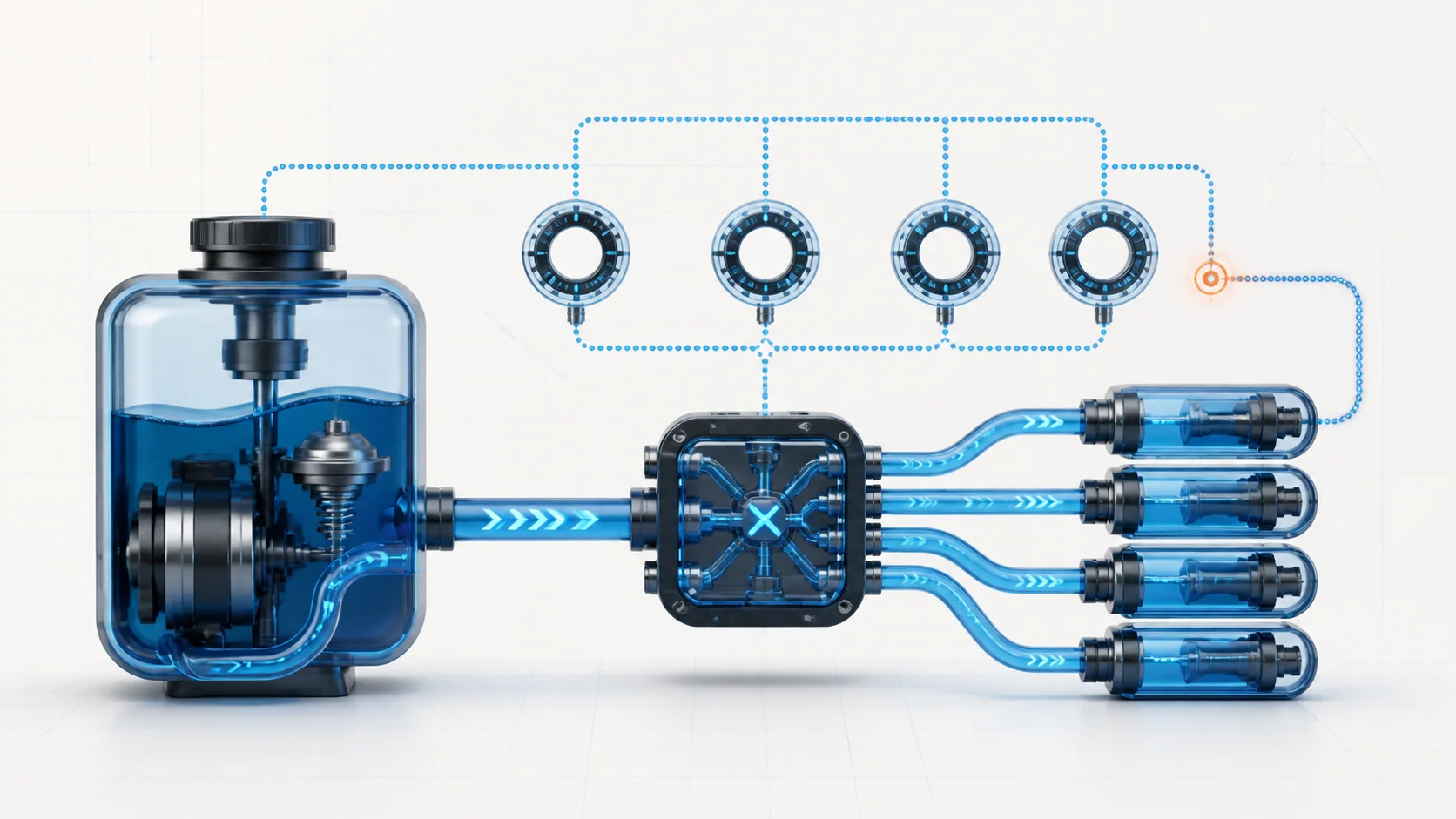
The system has three connected responsibilities:
- Supply fuel from the tank to the engine at controlled pressure.
- Control how much fuel each injector delivers as engine demand changes.
- Use exhaust feedback to correct the mixture when feedback control is active.
The reviewed R18Z1 system uses a returnless fuel-supply arrangement. Its pressure regulator is incorporated into the in-tank pump assembly, where fuel can return locally to the tank. There is no need for a separate engine-to-tank return pipe in that arrangement. The pump assembly also contains the fuel filter, and the supply line carries fuel toward the rail and injectors.
The powertrain control module (PCM) controls injector energizing time. A basic injection calculation is adjusted for operating conditions; longer or shorter commanded duration changes the amount delivered. That command is only one part of the result. Incorrect supply pressure or unequal injector delivery can produce a mixture that differs from what the PCM intended.
How air measurement and exhaust feedback interact
The control system uses information about incoming air and engine operation to establish the fuel requirement. The front air/fuel-ratio (A/F) sensor and the downstream heated oxygen sensor provide exhaust information used by mixture-control functions. Their positions and jobs are not interchangeable, and a code referring to post-catalyst correction does not automatically condemn the downstream sensor.
Feedback is not active in every operating condition. Starting, warm-up, and some higher-load conditions can use different control strategies. Compare scan data under the conditions relevant to the fault, rather than judging the system from an isolated reading during a different operating state.
Fuel correction shows the controller's response to the mixture information it receives; it does not identify the cause. A rich indication can reflect excess delivered fuel, an incorrect air estimate, or misleading feedback. Cylinder imbalance adds another question: are all cylinders receiving and burning their charge consistently?
Three diagnostic directions
| STEP guide | What the fault directs attention toward | Why diagnosis extends beyond one part |
|---|---|---|
| P0172 - Fuel system too rich | Rich-mixture correction under the recorded operating conditions | The reviewed path includes air measurement, fuel pressure, injectors, crankcase contamination, A/F feedback, and fuel quality |
| P2097 - Post-catalyst fuel trim too rich | Post-catalyst correction and the integrity of its feedback context | Exhaust leakage or restriction and the front/rear sensor paths must be separated before choosing a repair |
| P219A - Air/fuel ratio variation between cylinders | Unequal cylinder behavior | Compression, valve clearance, injector delivery, EGR passages, and deposits are possible diagnostic branches |
Symptoms and failure categories
The warning lamp may be the only obvious symptom. A mixture or cylinder-balance problem can also be accompanied by uneven running, hesitation, or increased fuel consumption. Symptoms help reproduce the concern, but they do not reliably separate a fuel-delivery problem from a feedback or mechanical problem.
For P0172, distinguish actual delivery from the information used to calculate and correct it. The exact-source procedure checks the air-measurement path and pressure before progressing through other causes. It also considers contaminated engine oil and fuel quality. Do not assume a rich code means a weak pump, or that replacing an injector is justified without a directed test.
For P2097, keep the exhaust in the diagnostic picture. A leak between the sensing locations or an exhaust restriction can undermine the interpretation of fuel correction. Inspect the relevant connections and follow the applicable sensor-diagnosis sequence; the code is not proof that the catalyst or rear oxygen sensor needs replacement.
For P219A, do not restrict the investigation to fuel components. A cylinder with a mechanical problem may not behave like its neighbors even if the injectors receive normal commands. The reviewed procedure separates compression and valve-clearance concerns from injector-related imbalance, and includes EGR/deposit checks in the appropriate branches.
A practical diagnostic strategy
- Preserve the evidence. Record all codes, freeze-frame data, and available snapshots before clearing or resetting anything. Note recent refueling, repairs, modifications, and when the symptom occurs.
- Resolve relevant companion codes in the specified order. A sensor, circuit, or operating-condition fault can change how a mixture code should be investigated. Follow the exact code procedure's priorities.
- Reproduce the relevant operating condition safely. Compare warm-up state, load, and other captured conditions. A monitor that has not completed is not the same as a passed monitor.
- Choose the diagnostic branch. For a general rich condition, separate air measurement and fuel delivery from feedback. For post-catalyst correction, include exhaust integrity. For cylinder imbalance, include mechanical and cylinder-specific checks.
- Use directed tests to isolate the cause. Pressure testing, signal evaluation, and cylinder comparison answer different questions. A component substitution or injector interchange belongs only in the applicable service procedure, with its handling and verification requirements.
- Verify under meaningful conditions. Confirm the original symptom and code behavior after the repair. Complete required learning or reset operations only when directed, then evaluate monitor completion and any remaining pending or confirmed codes.
Safety before opening the fuel system
Gasoline and vapor present a fire hazard. Work with suitable ventilation, control ignition sources, and use appropriate eye protection and fuel-handling equipment. Do not open a connection simply because the engine is stopped: follow the exact pressure-relieving procedure first. Relieving tank pressure at the filler cap is not, by itself, the complete fuel-line pressure-relief procedure.
Protect fuel hoses and quick-connect fittings from heat, contamination, and excessive bending or twisting. Use the specified connection method and replacement requirements, then inspect for leakage before returning the vehicle to service. Do not improvise a pressure-test connection or copy a pressure value from a different Civic engine. Exhaust inspection also requires precautions around hot components, and running-engine checks require clearance from moving parts.
What repairs generally involve
The evidence may support correcting an air-measurement problem, restoring fuel supply or injector delivery, repairing exhaust leakage or restriction, correcting a sensor/connection fault, or addressing a mechanical, EGR, or deposit-related cause. Choose the repair category from the completed diagnostic branch, not from the part named in a DTC description.
A cleared warning lamp is not sufficient verification. Recheck for fuel leaks after any opened connection, confirm normal operation, and complete the relevant monitor or directed verification. If the fault cannot be reproduced or the monitor remains incomplete, record that limitation instead of calling the vehicle repaired.
The central distinction is between fuel delivery, mixture feedback, and unequal cylinder behavior. Keeping those questions separate makes the linked DTC guides more useful and reduces unnecessary parts replacement.