What this code means
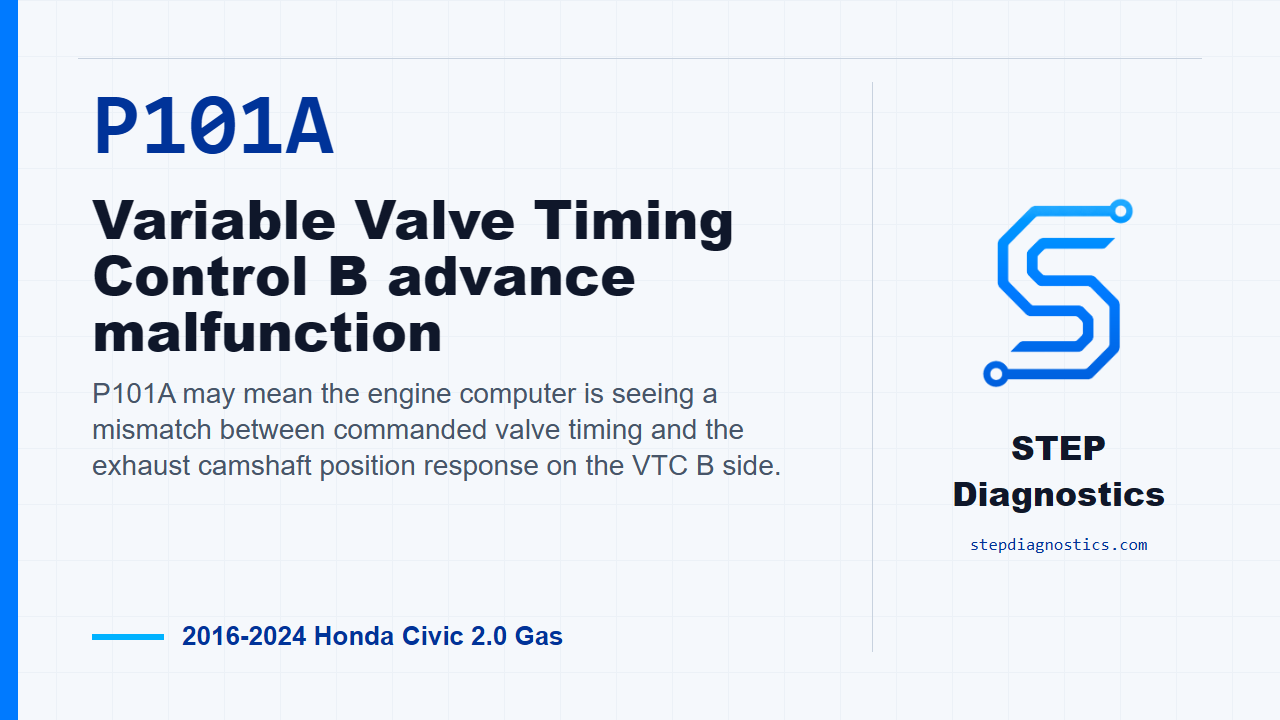
P101A may mean the engine computer is seeing a mismatch between commanded valve timing and the exhaust camshaft position response on the VTC B side.
What the vehicle may do
- The vehicle may turn on the check engine light.
- The engine may run rough or feel down on power.
- The concern can be intermittent, depending on operating conditions.
Possible fault areas
- Possible VTC oil control concerns.
- Possible VTC actuator concerns.
- Possible oil passage restriction or debris.
- Possible mechanical timing alignment concern, especially after recent actuator work.
Diagnostic path
Open and code logic
On this 2.0 L Engine w/o Turbocharger Civic, P101A is a Variable Valve Timing Control B advance malfunction. In plain terms, the PCM is watching commanded exhaust cam timing against actual cam phase. This code may show up when the VTC system is not responding the way the PCM expects. The driver may notice rough running, reduced power, or a check engine light, and the broad possible fault areas can include oil control to the VTC system, the actuator side of the system, oil passage restriction, or mechanical timing alignment. The key setting logic is command versus response: if the retarded exhaust camshaft phase angle is higher than the commanded value, the PCM calls that abnormal and stores P101A.
Start with basic checks and code priority
Before diving into the VTC-specific checks, start with the basic system checks and follow a structured diagnostic approach. If another related camshaft-position code is stored at the same time, handle P101A first, then recheck that other code afterward. Also, if P101A appeared after the VTC actuator was replaced, verify that the correct timing marks on the crankshaft pulley were used before chasing the rest of the system.
VTC control and actuator checks
Next, test the VTC oil control solenoid valve B. After that, inspect VTC actuator B. Keep those in that order, because this diagnostic path checks control of the oil flow before moving into the actuator side. The detailed substeps for those two checks are not available here, so if you do not have the exact test steps in front of you, pause, recheck the earlier diagnostic path, and avoid guessing.
Oil passage inspection
After the solenoid and actuator checks, inspect the VTC system oil passage. Check for debris or clogs in that passage. Normal condition is simple: there is no debris or clogs. If debris or clogging is present, the diagnostic result is a problem with the VTC system oil passage.
Confirmation and verification
Keep confirmation separate from the category testing. The confirmation step given here is to start the engine. After any correction made from the diagnostic path, verify the repair and confirm the code stays gone.
Takeaway
The takeaway on P101A is to treat it as a VTC command-versus-response problem: check priority first, confirm timing-mark concerns if the actuator was recently replaced, then work through the oil control, actuator, and oil-passage checks in order. For more diagnostic training, visit stepdiagnostics.com.
Final check
P101A is often approached by comparing commanded cam timing to actual response, then checking the VTC control, actuator, oil passage, and timing alignment context in order.
For more guided automotive diagnostics, visit STEP Diagnostics.