
Mechanic Guides
Battery Hydrometer Temperature Correction: Keep the Raw Reading and Reference Together
Apply the identified hydrometer temperature convention to a permitted flooded-battery test. Preserve raw cell readings, compensation state and comparison limits.
Published · 5 min read
Quick answer
For a permitted flooded-battery hydrometer test, keep the original specific-gravity reading and electrolyte temperature. Apply the matching correction convention once, record its reference temperature, and compare the corrected result only with the applicable battery criteria.
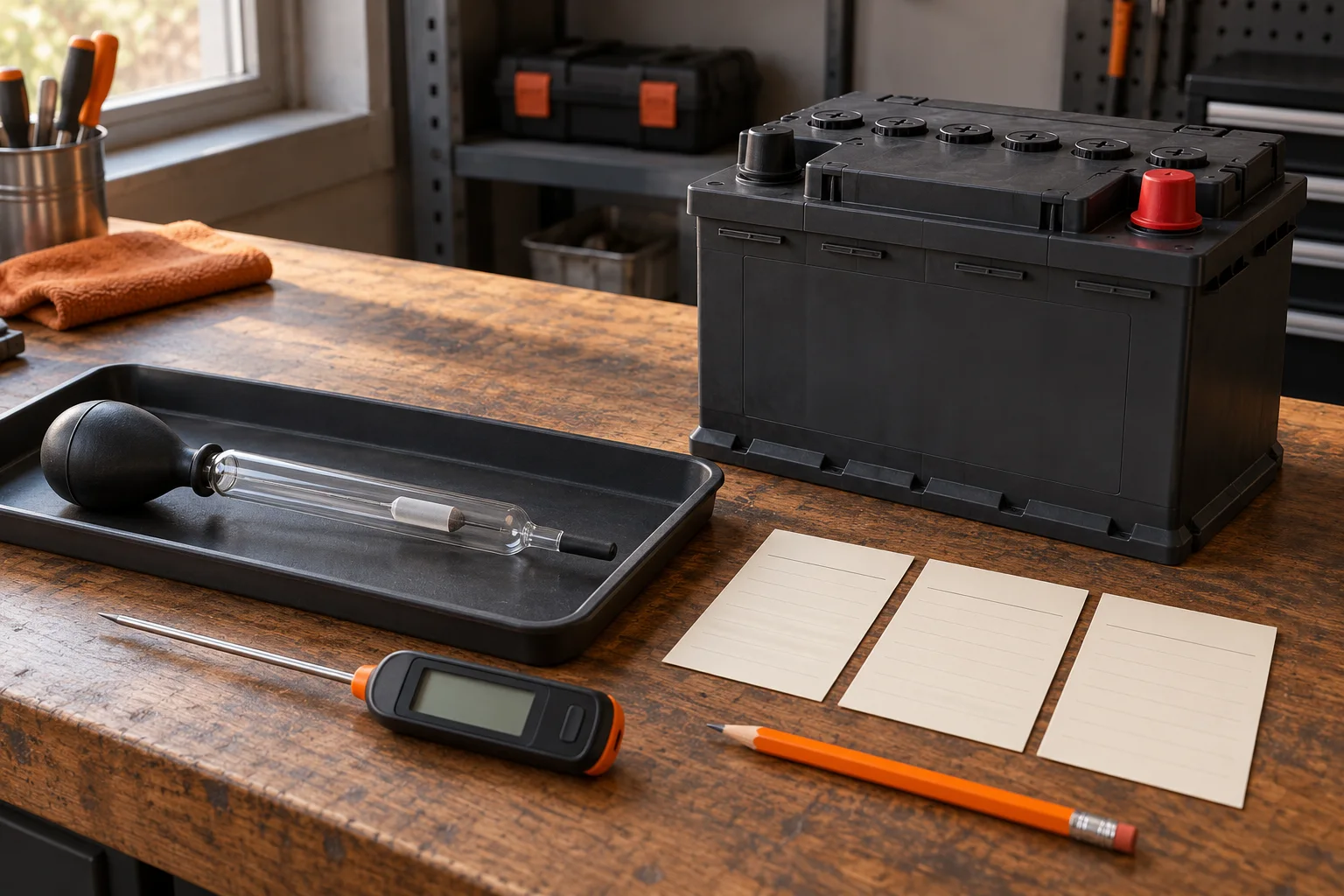
A specific-gravity number is incomplete when the repair order omits its temperature basis. An original hydrometer indication and a temperature-corrected value can be different entries from the same permitted battery test. Keep both so the next technician can reconstruct the comparison.
This guide concerns serviceable flooded lead-acid batteries for which electrolyte sampling is permitted. It does not authorize opening a sealed, AGM, gel or lithium battery. Follow the applicable battery and instrument instructions for access, personal protection and electrolyte precautions; the worksheet is a documentation aid.
Establish what the instrument reports
Identify the hydrometer, its scale and whether its displayed result already includes temperature compensation. A thermometer fitted to a tool does not by itself tell another technician what correction has been applied. Save the instructions that define the instrument's output.
The Rolls Battery specific-gravity bulletin, modified January 30, 2023, makes its sampling method instrument-dependent and calls for recording cell identity and the result. Its discussion also explains that electrolyte temperature affects specific gravity. These points support keeping the measurement context with each cell entry.
Record the electrolyte temperature used by the applicable method, with its unit. An assumed shop-air temperature is not a documented electrolyte-temperature observation. If that input was not obtained, mark it unresolved rather than manufacturing a corrected number.
Choose one identified correction convention
Discover Battery's hydrometer guidance provides Table 2 for a non-temperature-compensated hydrometer. Its hydrometer column has zero correction at 80 degrees F, or 26.7 degrees C. Entries below that reference subtract from the reading; entries above it add.
That table is an identified example, not a universal instruction for every hydrometer and battery. The Rolls bulletin describes a different correction formula. Do not take a reference temperature from one source and an adjustment from another. Retrieve the convention that applies to the actual equipment and battery, and preserve its title or revision in the record.
Keep specific-gravity corrections separate from other quantities. The Discover page has distinct hydrometer and voltmeter columns; an adjustment intended for a voltage reading is not an SG correction. Label the column used before doing arithmetic.
Check an invented calculation
Suppose a fictional permitted test produced an uncorrected SG reading of 1.244 at an electrolyte temperature of 60 degrees F. Assume, solely for this example, that Discover Table 2 is the applicable convention and no correction has already been applied. Its hydrometer entry at that temperature is minus 0.008.
The example calculation is 1.244 - 0.008 = 1.236, referenced to 80 degrees F under that table. Retain 1.244 as the original reading and 1.236 as the derived entry. These are invented arithmetic inputs, not measured vehicle data or a battery acceptance threshold.
If the original instrument result was already compensated to the required basis, applying the same adjustment again would change its meaning. Record the compensation state first. If it is unknown, preserve the displayed value and resolve the instrument instructions before publishing a corrected result.
Preserve the cells before summarizing
Use the downloadable record for each permitted cell observation:
- Battery identity and construction; applicable procedure and sampling permission.
- Cell identity, hydrometer model and original SG reading.
- Electrolyte temperature, unit and how it was established.
- Compensation state, correction source, reference temperature and selected adjustment.
- Corrected SG, arithmetic and any rounding recorded separately.
- Applicable comparison criterion, unresolved inputs and next authorized check.
A summary should not replace the underlying cell values. When a repeated observation uses a different tool, temperature basis or preparation, record that change. Similar-looking numbers are not automatically equivalent evidence.
Keep the battery decision separate
A correctly transcribed calculation establishes the derived number under its stated assumptions. It does not independently establish remaining capacity, starting performance or replacement need. Use the applicable battery criteria and the rest of the prescribed diagnostic path before reaching that conclusion.
The separate surface-charge guide addresses preparation for an electrical battery test. It does not supply a hydrometer correction or make the two methods interchangeable. Attach this worksheet to the diagnostic report so another technician can see what was measured and what remains unknown.
To discuss evidence handoffs in your independent shop, request STEP Early Access. No hydrometer integration, automatic correction or battery verdict capability is claimed for STEP here.