
Mechanic Guides
Micrometer Ratchet vs. Friction Thimble: Record How the Reading Was Taken
Distinguish micrometer ratchet stops, friction thimbles and plain thimbles. Preserve tool identity, technique and original readings in a shop handoff card.
Published · 5 min read
Quick answer
Identify the exact micrometer and its force device. Follow its operating instructions; an audible click does not establish calibration or part acceptance.
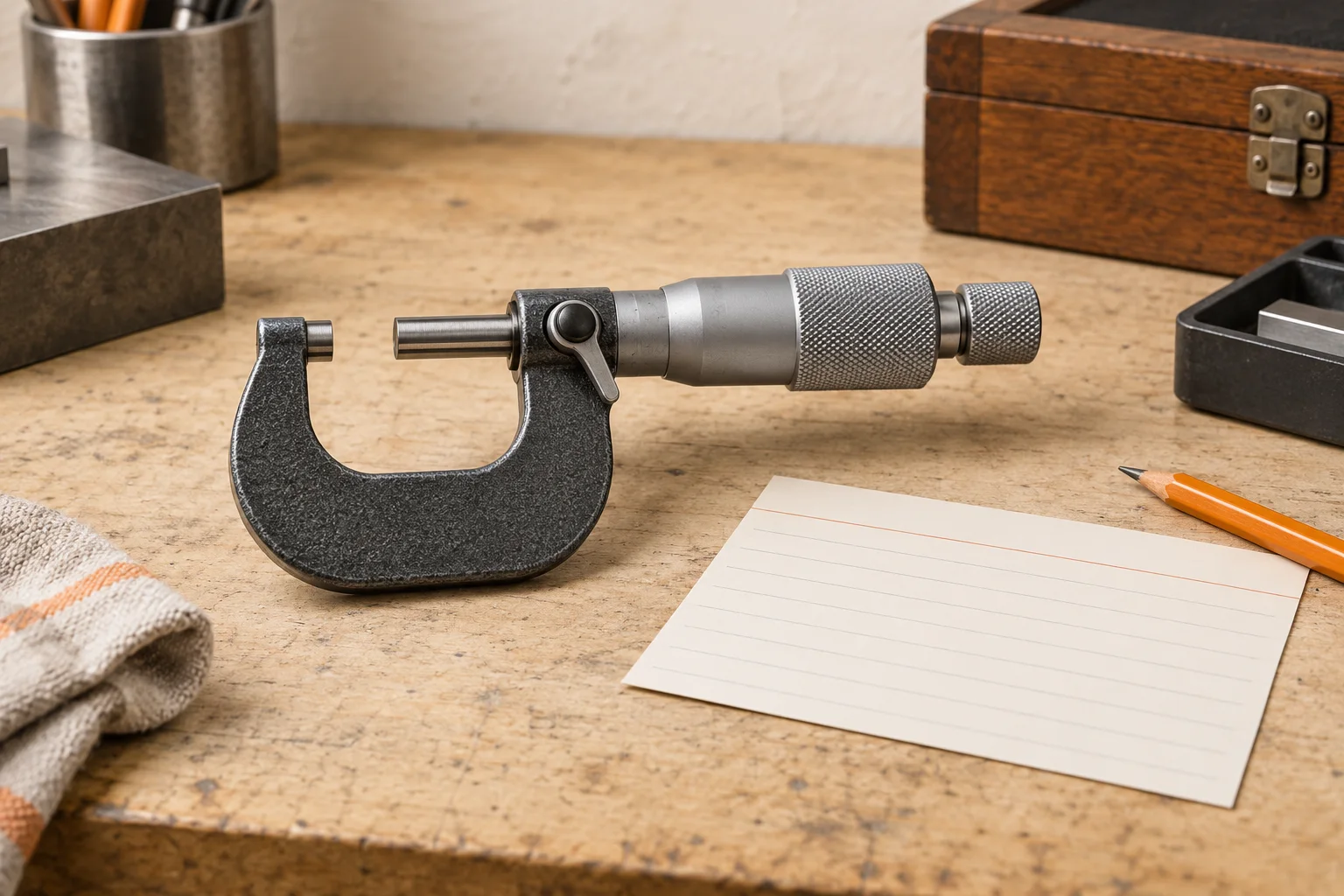
Which control produced the measurement?
A micrometer ratchet, friction thimble and plain thimble are not the same operating control. Before comparing two mechanics' readings, identify the actual tool and the control used for final contact. The useful shop question is whether the readings were taken under the required method, not whether someone heard a click.
Mitutoyo's Product Fundamentals distinguishes plain thimbles from constant-force devices. The plain version depends on operator feel. Its friction-thimble description emphasizes convenient one-handed access without audible feedback; the ratchet stop provides tactile and audible feedback. A ratchet thimble combines accessible operation with that feedback. The manufacturer describes force devices as a way to reduce differences between operators.
Start with the exact instructions
Find the model's operating instructions before prescribing a technique. Record whether the tool has a plain thimble, friction thimble, ratchet stop or ratchet thimble. Do not identify the mechanism solely from a familiar-looking handle.
This guide supplies no universal number of clicks, tightening force or calibration interval. The mechanism's feedback is an operating cue; it is not a vehicle specification, a calibration certificate or evidence that a part meets its service limit.
For a repair decision, retrieve the applicable measurement procedure and required instrument. Record the part, feature and location being measured. A correct reading at the wrong location still does not answer the intended service question.
Keep disagreements visible
Suppose a handoff note says only, “Both readings match.” That leaves the next mechanic unable to tell whether both people measured the same feature or used the same final-contact control. Rewrite the note around the original observations.
Use a separate row for each reading. Include the operator, tool identity, units, measurement location, control used and applicable instruction. Preserve a repeat as a new observation with its reason. Do not overwrite the first value because the second looks more believable.
If two operators disagree, identify what changed before combining their readings. A different instrument, contact location or technique belongs in the record. An average is not a substitute for resolving an unsupported method.
A force-device handoff card
The downloadable card is an original documentation aid. Complete these fields before another technician uses the result:
- Tool model and ID; operating instructions and calibration record reference.
- Force-device type and the final-contact control actually used.
- Vehicle, part, feature, location and applicable measurement procedure.
- Original reading and units; operator and observation order.
- Repeat reading, reason for repeat and any changed conditions.
- Supported comparison with the requirement; unresolved question and next check.
If the instructions or tool identity are missing, mark them missing. Do not replace them with a generic technique borrowed from another micrometer.
Use the result for the right decision
The caliper zero-check guide explains a related distinction between a tool observation and broader calibration evidence. For brake measurements, the runout and thickness-variation guide keeps the feature being measured attached to the result.
For an independent shop, a clear handoff makes the next question concrete: which instruction or observation is still needed before the repair decision? That workshop context is relevant to STEP's intended mechanic audience. Request STEP Early Access to follow its development. This worksheet is usable on its own and makes no promise about STEP measurement features.
Sources and limits
Technical distinctions above come from Mitutoyo's Product Fundamentals, page 2. The ratchet-thimble literature page provides a manufacturer entry point for further tool-specific reading. This article is a source-based editorial guide, not a hands-on instrument test or an OEM measurement procedure.