What this code means
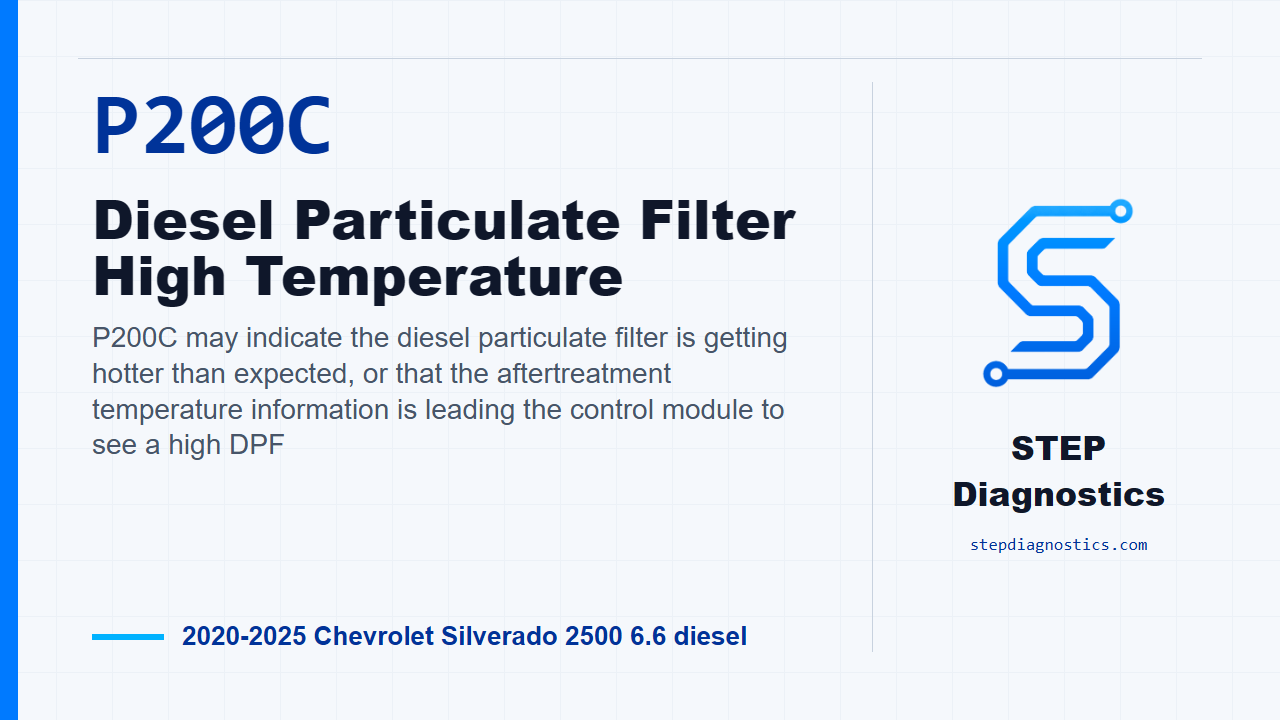
P200C may indicate the diesel particulate filter is getting hotter than expected, or that the aftertreatment temperature information is leading the control module to see a high DPF
What the vehicle may do
- The vehicle may run the cooling fan.
- DPF regeneration may be inhibited.
- The engine may go into reduced power.
- The engine may shut down in some situations.
Possible fault areas
- Possible aftertreatment fuel injector concerns.
- Possible engine fuel injector leakage concerns.
- Possible high pressure fuel system concerns.
- Possible exhaust system or turbocharger concerns.
- Possible induction system concerns.
- Possible oil consumption concerns.
Diagnostic path
What P200C is telling you
On this 2020 to 2025 Chevrolet Silverado 2500 with the 6.6 diesel, P200C means the diesel particulate filter temperature is being flagged high. In plain terms, the aftertreatment system may be seeing more heat at the DPF than it expects. The truck may run the cooling fan, inhibit DPF regeneration, reduce engine power, or even shut the engine down when this fault sets. Possible areas include fuel control problems, aftertreatment fuel injection, exhaust or turbocharger issues, induction leaks or restrictions, oil consumption, and the DPF itself. Start with the basic system checks, keep the diagnosis structured, and do not jump straight to the filter.
Set up the monitor and check for related faults first
Turn the ignition on with the vehicle in service mode. Before chasing P200C, make sure there are no related faults already set in the temperature and pressure inputs, intake and exhaust sensing, particulate and NOx sensing, EGR control, fuel injectors, or the aftertreatment fuel injector. If another related fault is present, check what that fault means first. For this monitor, the engine is running, ignition voltage is Greater than 11 V, and the exhaust gas temperature sensor-related fault has to be not set. Once those gates are met, the monitor runs continuously.
Reproduce the conditions and confirm the code
Next, reproduce the operating conditions for the code. If you have captured operating data from when the fault happened, use that to match the conditions as closely as you can. The setting point for P200C is Exhaust Gas Temperature Sensor 4 Greater than 850°C (1,562°F) for greater than 45 s. Verify whether P200C sets again. If it does not set, the check is all OK at this point. If it does set, move into the testing sequence instead of guessing.
Start testing with fuel added to the exhaust
The first targeted check is the exhaust aftertreatment fuel injector. Verify it is not leaking or stuck open. If that condition is present, correct it — repair or replace as necessary. If it checks good, move on to the engine fuel injectors and verify there is no leaking condition there. Again, if the condition exists, repair or replace as necessary before continuing.
Continue through fuel pressure, exhaust, induction, and oil consumption
If the injector checks do not find the problem, verify the high pressure fuel pump is not creating an incorrect pressure condition. If that condition exists, repair or replace as necessary. If it does not, inspect the exhaust system and turbocharger for cracking, rattling internal parts, leaks, loose clamps, missing components, restrictions, or visible damage. Correct any condition found. If the exhaust side checks out, inspect the induction system for collapsed or leaking intake ducting, leaking seals, loose clamps, missing components, or visible damage. Then verify there is not an oil consumption condition. Work through those areas in order and only move on when the current condition is not present.
Use regeneration as the next decision point
If no condition is found in those earlier checks, perform a DPF service regeneration. If the service regeneration is successful, the result is all OK. If the service regeneration is not successful, replace the Exhaust Particulate Filter. After a cold start, a useful sanity check is that the Exhaust Gas Temperature Sensor 1−5 values should rise steadily and then stabilize.
Verify the repair and reset only when appropriate
After the repair, verify the repair and confirm the code stays gone. If the Exhaust Particulate Filter has been replaced or serviced, perform the DPF reset only then. The takeaway is simple: with P200C, prove the high-temperature fault path first, rule out fuel, exhaust, induction, and oil consumption causes in order, and let the service regeneration result decide the filter call. For more diagnostic training, visit stepdiagnostics.com.
Final check
P200C is often a heat-management and aftertreatment diagnostic path, so the diagnosis should separate related sensor or system faults from actual fuel, air, exhaust, oil consumption, and DPF service-
For more guided automotive diagnostics, visit STEP Diagnostics.