What this code means
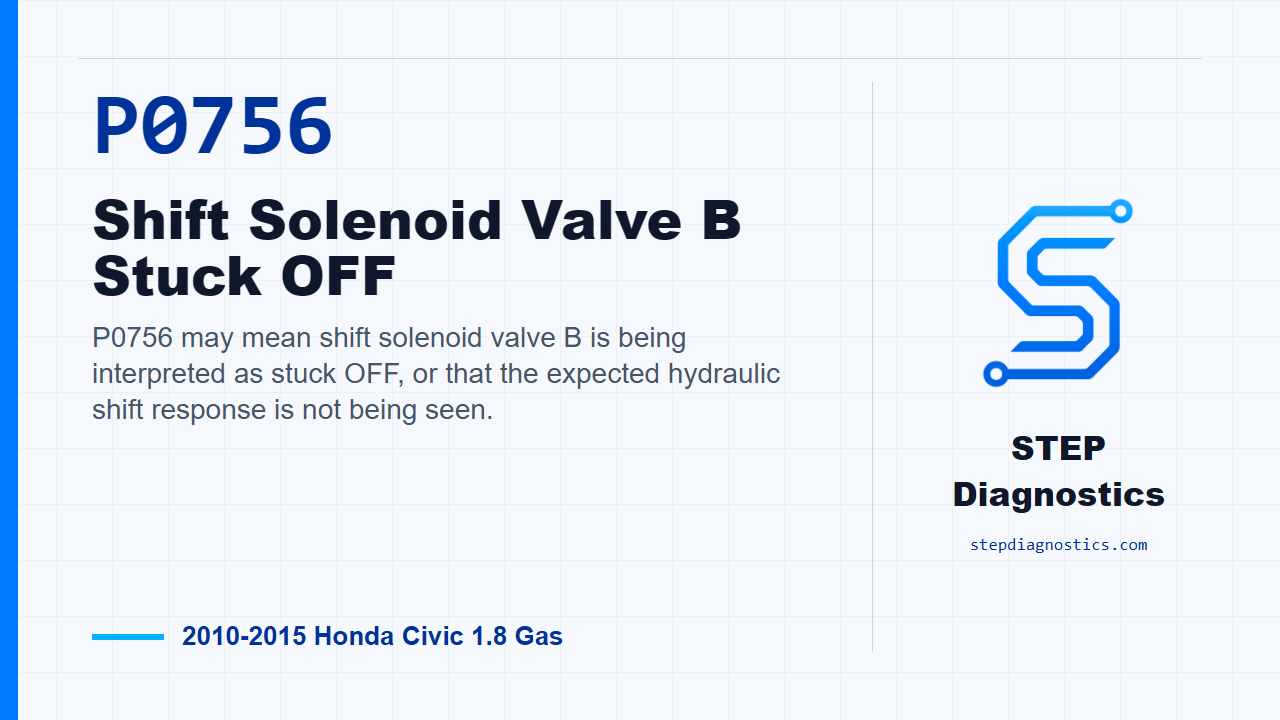
P0756 may mean shift solenoid valve B is being interpreted as stuck OFF, or that the expected hydraulic shift response is not being seen.
What the vehicle may do
- The vehicle may have delayed, harsh, or abnormal shifts.
- The transmission can feel like it is not shifting normally.
- The malfunction indicator may be on.
Possible fault areas
- Possible fluid level, fluid condition, or leak concerns.
- Possible shift solenoid valve B operation concern.
- Possible hydraulic shift valve or servo body concern.
- Possible internal transmission wear or debris concern.
Diagnostic path
Opening and setup
On this 2010 to 2015 Honda Civic with the 1.8 gas engine, P0756 is for shift solenoid valve B stuck OFF. In plain language, the transmission control strategy may be commanding a shift result and not seeing the hydraulic response it expects. The driver may notice delayed, harsh, or abnormal shifting, and the possible fault areas can include fluid level or fluid condition, solenoid operation, the shift valve area, or internal transmission wear. Before you get into the checks, save the freeze data and any on-board snapshot with the HDS, then start with the basic system checks so you know what conditions were present when the code set.
Start with the ATF condition check
First, warm the engine up to normal operating temperature, which is when the radiator fan comes on. Then make sure the transmission is filled to the proper level, and look for any fluid leaks. After that, drain the ATF through a strainer and inspect what the strainer catches. If you find metal debris or excessive clutch material, the path calls for replacing the transmission, then moving to repair verification. If the strainer does not show that kind of debris or clutch material, replace the ATF and continue with the next diagnostic check.
Check shift solenoid valve B operation
Next, check the operation of shift solenoid valve B with the HDS. Turn the ignition switch to ON (II), clear the DTC, then select Shift Solenoid Valve B in the Miscellaneous Test Menu and command it with the HDS. Listen for the solenoid response. If a clicking sound is heard, shift solenoid valve B is considered OK and you move on to duplicate the problem. If no clicking sound is heard, replace shift solenoid valve B, then go to repair verification.
Duplicate the fault
Now verify whether the problem is still present. Test-drive the vehicle with the shift lever in D, and let the transmission shift through all five gears. Watch the OBD STATUS for P0756 in the DTCs menu with the HDS. If the HDS shows FAILED, the failure has been duplicated. At that point, the diagnostic path points to a faulty shift valve B, and calls for replacing the servo body, which contains shift valve B, or replacing the transmission, then performing repair verification. If the HDS shows PASSED, treat it as an intermittent failure and the system is OK at this time. If it shows NOT COMPLETED, repeat the test-drive under the needed conditions and check the status again.
Verify the repair and confirm the code stays gone
Keep verification separate from the testing. Turn the ignition switch to ON (II), clear the DTC with the HDS, then test-drive the vehicle again with the shift lever in D and let the transmission shift through all five gears. Monitor the OBD STATUS for P0756 in the DTCs menu. If the HDS shows PASSED, troubleshooting is complete for this code. After that, check for any other pending or confirmed DTCs, and if other codes are present, handle those by what they mean. If the HDS shows FAILED, pause, go back through the earlier diagnostic path, and recheck without guessing. If it shows NOT COMPLETED, meet the test condition and check the OBD STATUS again.
Takeaway
The key on P0756 is to separate fluid and debris problems from solenoid operation, then prove whether the fault duplicates under a full shift sequence before calling the repair complete. For more diagnostic training, visit stepdiagnostics.com.
Final check
P0756 diagnosis often starts with fluid condition, then solenoid operation, then verification of the fault during a full shift sequence.
For more guided automotive diagnostics, visit STEP Diagnostics.