What this code means
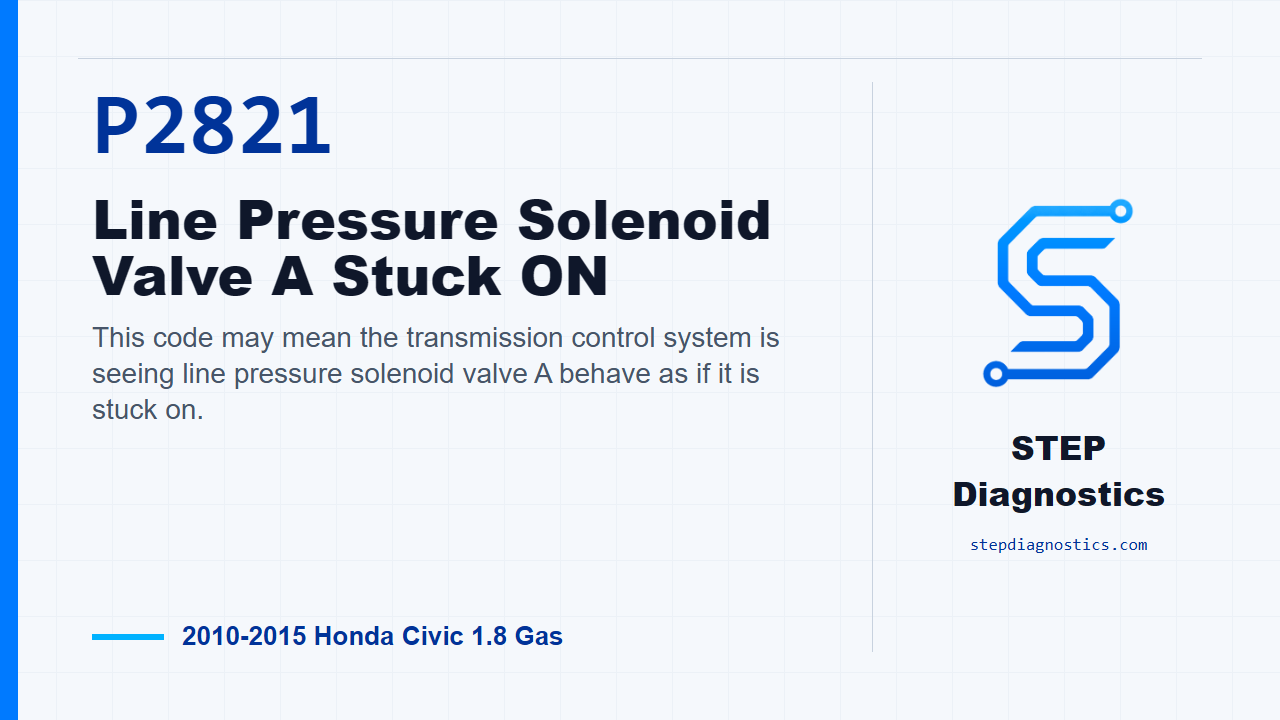
This code may mean the transmission control system is seeing line pressure solenoid valve A behave as if it is stuck on.
What the vehicle may do
- The vehicle may have abnormal or harsh shift feel.
- The transmission may not control line pressure as expected.
- The concern can be intermittent.
Possible fault areas
- ATF level, condition, or leaks may be involved.
- Metal debris or excessive clutch material may point toward internal transmission damage.
- Line pressure control or line pressure solenoid valve A may be involved.
Diagnostic path
Opening context
On this Civic, P2821 may mean the ECM or PCM is seeing line pressure solenoid valve A behave as if it is stuck on. In plain terms, the transmission pressure control may not be responding the way the module expects. The vehicle may have abnormal or harsh shift feel, the pressure control concern can be intermittent, and the possible fault areas can include ATF level or condition, fluid leaks, internal transmission debris, line pressure control, or the solenoid itself. We’re going to keep the diagnosis simple: check the fluid and debris first, then prove the line pressure condition before calling the solenoid.
Before testing
Before you get into the checks, save the freeze data and any on-board snapshot with the HDS. Also start with the basic system checks so you are not chasing a pressure code with an obvious setup or system issue still hanging around.
Step one: ATF condition and debris check
First, warm the engine up to normal operating temperature, to the point where the radiator fan comes on. Make sure the transmission is filled to the proper level, and look for fluid leaks. Then drain the ATF through a strainer and inspect what comes out. If the strainer has metal debris or excessive clutch material, the path is transmission replacement, followed by verification. If the strainer does not show metal debris or excessive clutch material, replace the ATF and move on to the pressure check.
Step two: duplicate the pressure fault
Next, measure normal line pressure with the shift lever in P. The decision here is whether normal line pressure is within the service limit. Do not guess at that pass-or-fail point; use the correct line-pressure service limit for the vehicle before making the call. If pressure is within the service limit, treat this as an intermittent failure and the system is OK at this time. If pressure is not within the service limit, the failure is duplicated. At that point, replace line pressure solenoid valve A, then move to verification.
Verify the repair
Keep verification separate from the diagnostic checks. Turn the ignition switch to ON, position II, then clear the DTC with the HDS. After that, measure normal line pressure again with the shift lever in P. If normal line pressure is within the service limit, troubleshooting is complete. If it is not within the service limit, go back to the pressure-check step and recheck the earlier diagnostic path instead of guessing.
Takeaway
The key on P2821 is not to jump straight to the solenoid. Check for ATF problems and internal debris first, then use the line pressure result in P to decide whether the fault is intermittent, duplicated, or ready for verification. For more diagnostic training, visit stepdiagnostics.com.
Final check
This diagnostic path often comes down to fluid and debris inspection first, then a line pressure decision, then repair verification.
For more guided automotive diagnostics, visit STEP Diagnostics.