What this code means
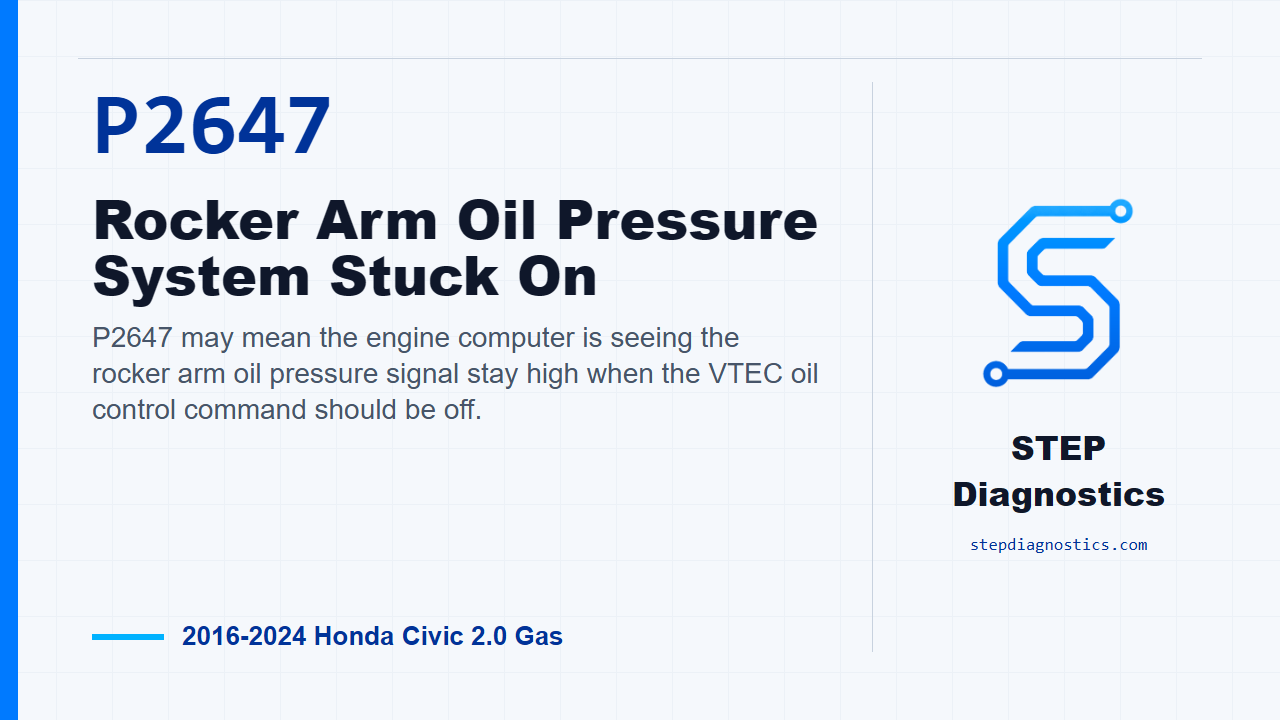
P2647 may mean the engine computer is seeing the rocker arm oil pressure signal stay high when the VTEC oil control command should be off.
What the vehicle may do
- The check engine light may be on.
- The vehicle may have reduced performance or VTEC-related drivability symptoms.
- The engine can feel normal at times, depending on when the monitor runs.
Possible fault areas
- Possible rocker arm oil pressure sensor signal concern.
- Possible rocker arm oil control valve or related oil control issue.
- Possible engine oil level or oil pressure related condition.
- Possible connector, circuit, or related system condition.
Diagnostic path
Open on what P2647 is looking for
On this 2016 through 2024 Honda Civic with the 2.0 liter non-turbo engine, P2647 is aimed at the VTEC rocker arm oil pressure system. In plain terms, the PCM is seeing the rocker arm oil pressure signal stay high when the rocker arm oil control solenoid is supposed to be off. The driver may notice a check engine light, possible reduced performance, or VTEC-related drivability issues, but the diagnostic path here is about proving whether the pressure signal matches what the system is actually doing. Start with the basic system checks and follow a structured diagnostic approach. If other VTEC or PGM-FI related codes or indicated systems are present, handle those first so they do not mislead this P2647 test.
Warm the engine and run the VTEC test
Once the preliminary checks are clear, start the engine. Hold engine speed at 3,000 rpm with no load. On a CVT, use P or N; on a manual transmission, use neutral. Keep it there until the radiator fan comes on, then let the engine idle. After that, run the HDS VTEC TEST. This gives you the operating setup needed before moving into the rocker arm oil pressure inspection.
Set up for rocker arm oil pressure inspection
For this sensor, there is not a direct standalone component test. The diagnostic path checks the related oil pressure behavior instead. Before installing the pressure gauge setup, make sure the engine oil is adjusted to the specified level. Turn the vehicle to OFF, disconnect the rocker arm oil pressure sensor 3P connector, and remove the rocker arm oil pressure sensor from the rocker arm oil control valve. Install the oil pressure inspection hose, adapters, test hose, and low pressure gauge setup, then attach the rocker arm oil pressure sensor to the pressure gauge adapter using the specified torque. Reconnect the rocker arm oil pressure sensor 3P connector. If the exact gauge layout or torque information is not available at the vehicle, pause and get that information before continuing. Do not guess on the tool setup or the sensor installation torque.
Compare actual pressure to the commanded state
Now perform the confirmation procedure again with the gauge installed. Watch the HDS display and check oil pressure while the VTEC solenoid valve status is OFF. Normal pressure in that state is less than 49 kPa (0.50 kgf/cm2, 7.1 psi). If the oil pressure is normal, the diagnostic result points to a problem with the rocker arm oil pressure sensor. If the oil pressure is abnormal, the result points away from the sensor and toward other related components in the rocker arm oil pressure system.
Finish the fault isolation
If the other inspection items have checked normal and you are down to the rocker arm oil control valve inspection, the remaining rocker arm oil control valve is treated as the cause. The main takeaway on P2647 is simple: prove what the oil pressure is doing when the VTEC solenoid is commanded off, then use that result to separate a pressure sensor issue from a related oil control problem. For more diagnostic training, visit stepdiagnostics.com.
Final check
This code is often diagnosed by comparing actual rocker arm oil pressure against the VTEC command state, then using that result to narrow the fault area.
For more guided automotive diagnostics, visit STEP Diagnostics.