What this code means
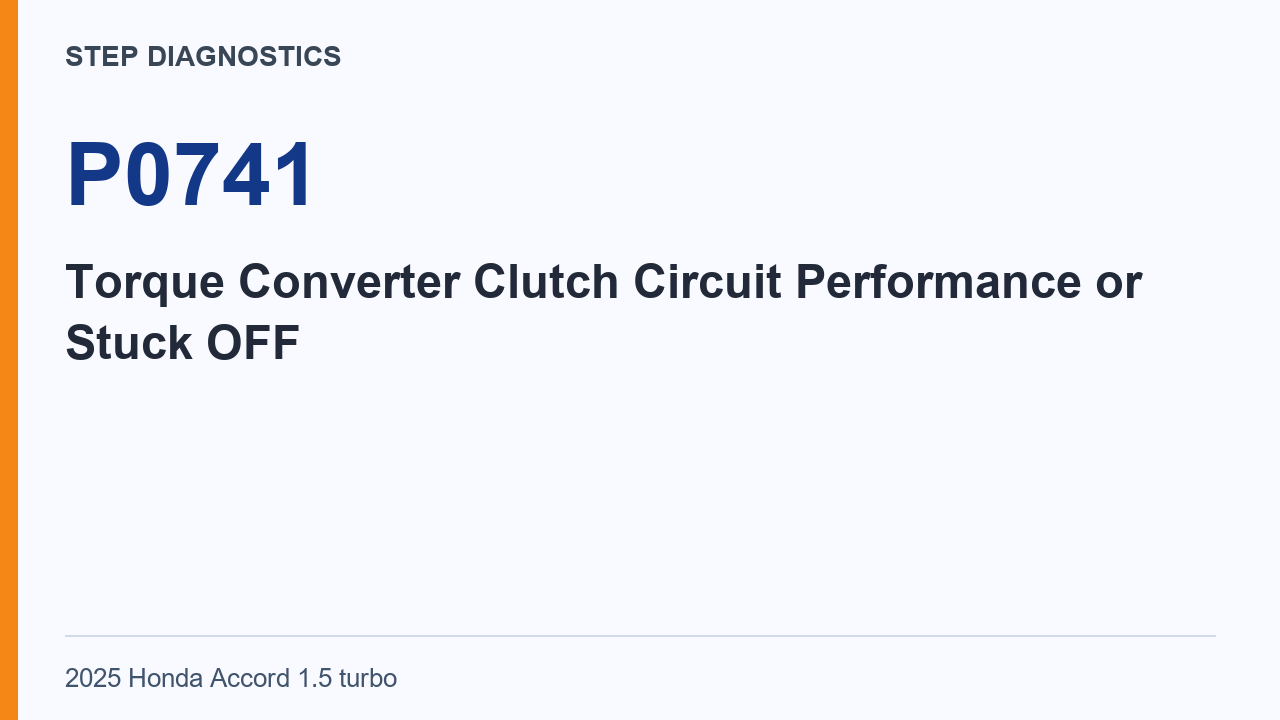
P0741 concerns the torque converter clutch. The transmission control module, or TCM, commands this clutch to lock.
P0741 concerns the torque converter clutch while lock-up is commanded ON. The TCM compares engine speed with input-shaft speed and stores the code when their ratio is outside the specified value in that commanded state. The control command and the speed relationship therefore belong together when interpreting the fault.
The diagnosis works through the solenoids, valve body and torque converter. These are distinct inspection areas in the lock-up diagnostic path. The later known-good valve body comparison adds a separate result: whether the failure is reproduced after that specified substitution.
What the vehicle may do
If the ratio between engine speed and input-shaft speed is outside specification while lock-up is commanded ON, the TCM stores P0741. In simple terms, the clutch may not be locking as commanded. The checks work through the solenoids, valve body and torque converter in order.
Possible fault areas
- Shift solenoid valve B.
- The solenoid that controls CVT lock-up clutch operation.
- The valve body assembly, including the Lc shift valve and Lc control valve.
- The torque converter.
The component inspections lead into the warm-up and flat-road drive sequences. Each sequence has its own warm-up requirement and timed driving portion. The first is followed by OFF (LOCK) before the repeated engine start and drive.
The known-good valve body check then has a clear two-way interpretation. Reproducing the failure points toward other related components; the symptom or DTC going away points toward the valve body assembly. The final torque converter conclusion depends on the other inspection items being normal.
Diagnostic path
Check the control components in order
Begin with the test for shift solenoid valve B. Next, test the CVT lock-up clutch control solenoid valve. Continue with the valve body inspection. This includes the Lc shift valve and Lc control valve. Then perform the torque converter inspection. Keep the results from these inspections separate, because the final torque converter conclusion depends on the other inspection results being normal.
Warm up the engine and make the first drive
Start the engine and let it reach normal operating temperature. During this warm-up, the radiator fan must come on twice. Test-drive on a flat road at about 37 miles per hour (60 kilometers per hour) for at least 1 minute. Then slow down and stop the wheels. Turn the vehicle to OFF (LOCK) mode.
The radiator-fan events establish the warm-up milestone stated by the procedure. The flat-road portion then uses the approximate speed and minimum driving time together. These are separate parts of the operating sequence: the fan criterion belongs to warm-up, while the speed and time belong to the drive. The repeated sequence retains those same requirements.
Repeat the warm-up and drive
Start the engine again. Let it reach normal operating temperature, with the radiator fan coming on twice. Again, drive on a flat road at about 37 miles per hour (60 kilometers per hour) for at least 1 minute. Slow down and stop the wheels. Keep both drive sequences matched to these conditions: a flat road, the stated approximate speed, and at least the stated driving time. The first sequence also includes turning the vehicle to OFF (LOCK) before starting again.
Evaluate the valve body with a known-good assembly
Use the HDS diagnostic tool's AT Data List for this check. Install a known-good valve body assembly and try to reproduce the failure. If the failure happens again with the known-good assembly, the problem is in other related components. If the symptom or DTC goes away, the valve body assembly must be faulty. This comparison is the basis for the valve body conclusion. Keep that result separate from the earlier solenoid and torque converter inspection results.
The known-good comparison helps distinguish the valve body assembly from the remaining related components. Its result is whether the failure is reproduced with that assembly in place. That result is different from a solenoid inspection finding and should remain associated with this particular comparison before the torque converter conclusion is used.
Apply the torque converter conclusion
When the other inspection items all show a normal condition, the remaining torque converter is identified as the cause. This conclusion applies under that condition, rather than simply because P0741 is stored.
Final check
Review the inspections in their original order and keep the valve body comparison tied to its actual result. For both road-test sequences, retain the flat-road condition, about 37 miles per hour (60 kilometers per hour), and at least 1 minute. For each warm-up, the radiator fan must come on twice. Use the torque converter conclusion only when the other inspection items are normal.
The final reasoning combines the earlier inspection findings with the known-good valve body outcome. The torque converter is identified as the remaining cause only under the stated normal-other-inspections condition. Keeping that condition visible explains why the final conclusion depends on the sequence of checks, rather than simply on the presence of P0741.