What this code means
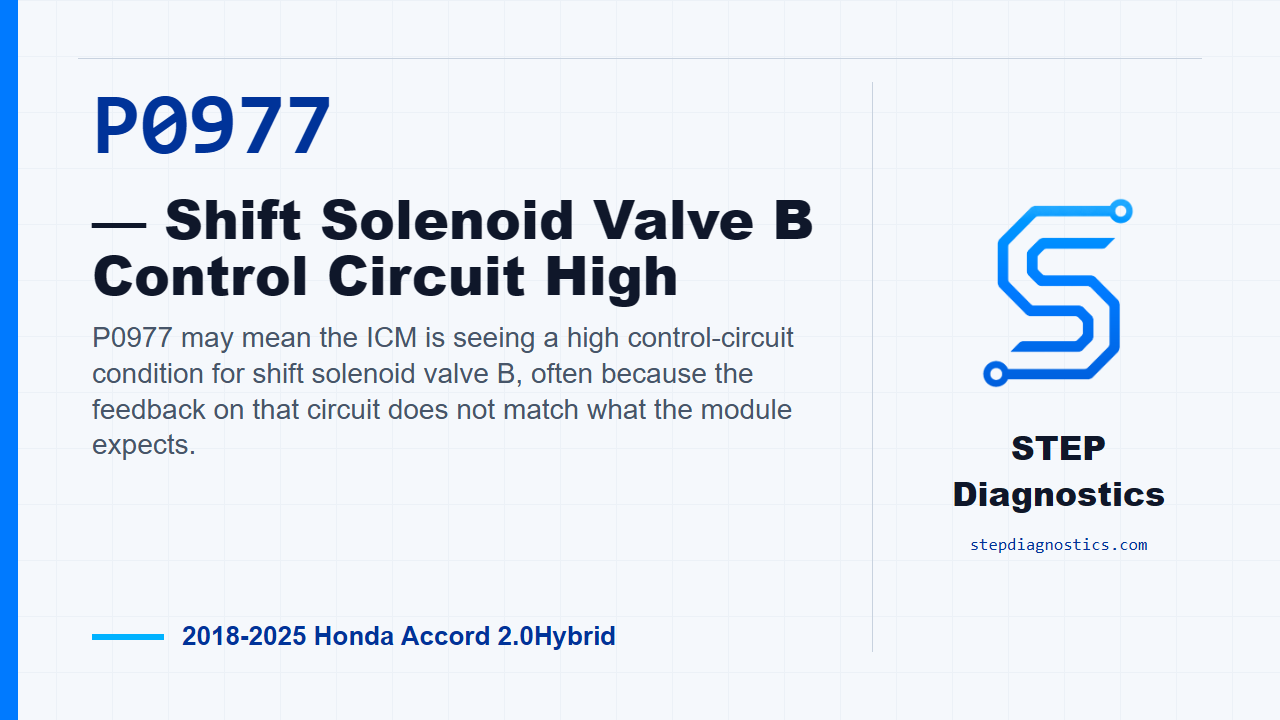
P0977 may mean the ICM is seeing a high control-circuit condition for shift solenoid valve B, often because the feedback on that circuit does not match what the module expects.
What the vehicle may do
- The vehicle may turn on a warning light.
- Transmission or drive behavior may feel abnormal.
- The vehicle can sometimes appear to operate normally until the fault monitor runs.
Possible fault areas
- Possible shift solenoid valve B circuit concern.
- Possible connector or wiring concern in the solenoid control path.
- Possible shift solenoid valve B-related component concern.
- Possible ICM involvement after the earlier checks pass.
Diagnostic path
Code focus and diagnostic approach
On this Accord Hybrid, P0977 is for the shift solenoid valve B control circuit reading high at the ICM. In plain terms, the module may be commanding that solenoid circuit one way and seeing feedback that does not agree. The driver may notice a warning light, abnormal transmission behavior, or the vehicle may seem normal until the monitor runs. The possible fault areas can include the solenoid circuit, the solenoid valve B area, connector or wiring issues, and, later in the path, the ICM itself. Start with the basic system checks and follow a structured diagnostic approach before getting into pinpoint testing. Also keep in mind that this path does not give a direct component-only test, so the diagnosis works through related circuit behavior instead.
Run the monitor conditions first
The logic for this code is simple: if the return signal does not match the ICM command to turn shift solenoid valve B OFF, the ICM treats that as an abnormal condition and stores the code. To begin, put the vehicle in READY TO DRIVE mode. Then shift to P position or P mode and wait for at least 1 second. That gives the monitor the basic operating condition it needs before you move into the circuit checks.
Simulate the solenoid B circuit response
Next, prepare for the shift solenoid valve B inspection by disconnecting the shift solenoid valve cover assembly connector, the 5P connector. Clear the ICM DTCs with the scan tool, then turn the vehicle OFF, in LOCK mode. Now jump terminal No. 4 of that shift solenoid valve cover assembly connector to body ground with a jumper wire. After that, run the related confirmation check. The expected result is that the related low-control code is indicated. If that inspection result is normal, this path points to a problem with shift solenoid valve B. If it is abnormal, the path points you back toward other related components instead of calling the solenoid by itself. The exact steps for that related confirmation check are not laid out here, so do not guess through it; pause, recheck the earlier diagnostic path, and make sure that confirmation result is valid before using it to make a decision.
Check the SH-B circuit for an open
If the path continues into the SH-B open-wire check, keep the shift solenoid valve cover assembly 5P connector disconnected, and disconnect ICM connector P, the 36P connector. Perform the SH-B open-wire inspection with the ignition mode OFF. The normal condition given for that check is less than 1 Ω. If the measurement is abnormal, the problem is in the circuit. Before putting meter leads on the circuit, make sure the terminal path is positively identified; if the connector view or table detail is not clear enough, stop and verify the setup instead of guessing.
ICM judgment and repair check
Only after the other inspection items show normal should the remaining ICM be treated as the cause in this diagnostic path. That is the end of the decision tree: first prove the solenoid-side response, then prove the SH-B circuit, and only then let the ICM conclusion stand. After the fault found by this path is corrected, keep verification separate from the pinpoint tests: verify the repair and confirm P0977 stays gone. The takeaway is to avoid jumping straight to the module or the solenoid. Make the circuit respond, check the open-wire path, and let the test results lead the call. For more diagnostic training, visit stepdiagnostics.com.
Final check
This code is best approached as an electrical control-circuit diagnosis: confirm the circuit response, check the open-wire path, and only then consider the remaining control-module conclusion.
For more guided automotive diagnostics, visit STEP Diagnostics.